☕ Coffee Ratio Calculator
Find the perfect coffee-to-water ratio for any brew method and serving size
| Cups of Coffee | Water (ml) | Water (fl oz) | Coffee (g) | Coffee (tbsp) |
|---|---|---|---|---|
| 1 Cup | 237ml | 8 fl oz | 13g | 2 tbsp |
| 2 Cups | 474ml | 16 fl oz | 26g | 4 tbsp |
| 4 Cups | 946ml | 32 fl oz | 53g | 8 tbsp |
| 6 Cups | 1420ml | 48 fl oz | 79g | 12 tbsp |
| 8 Cups | 1893ml | 64 fl oz | 105g | 16 tbsp |
| 10 Cups | 2366ml | 80 fl oz | 131g | 20 tbsp |
| 12 Cups | 2839ml | 96 fl oz | 158g | 24 tbsp |
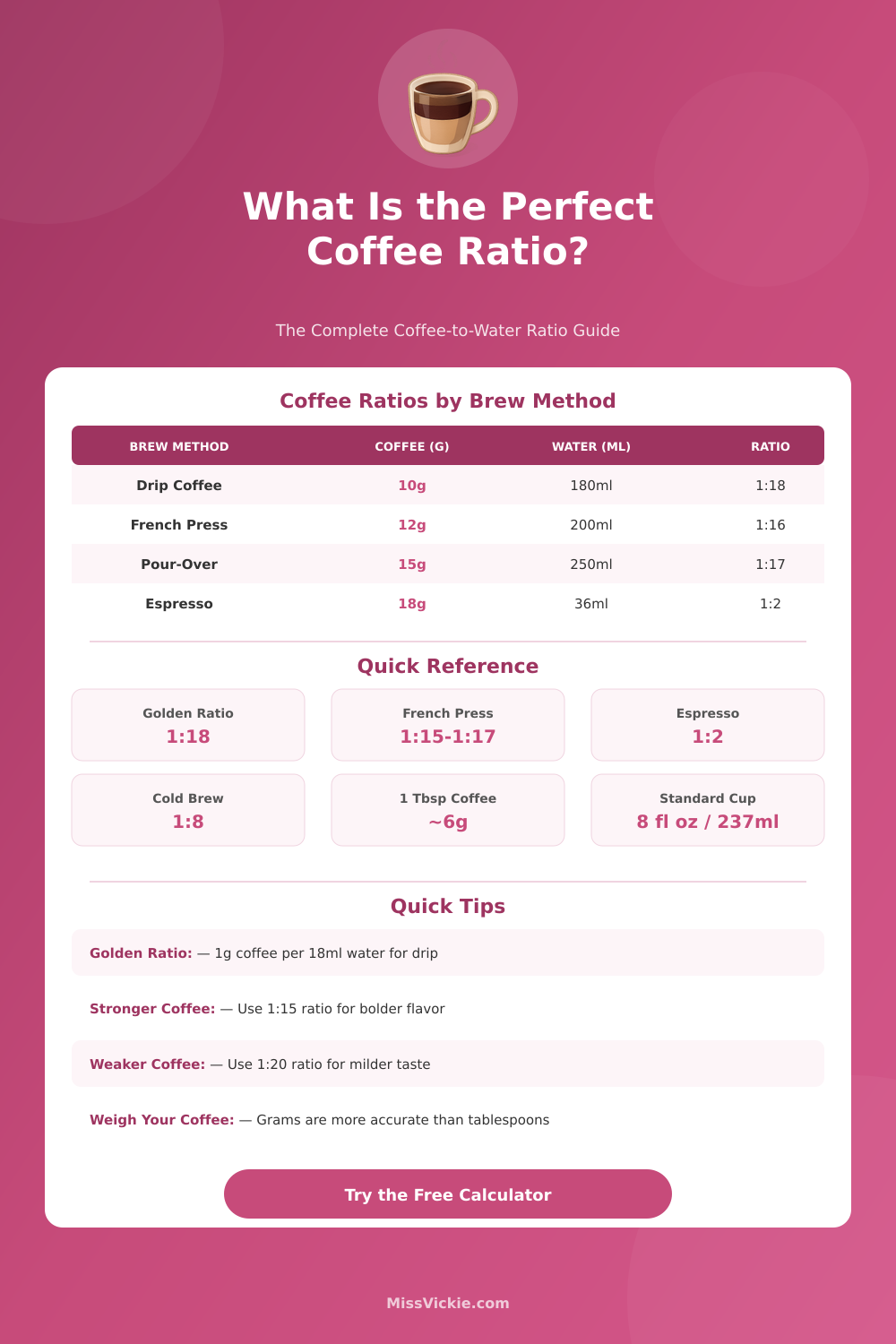
| Brew Method | Ratio (1:X) | Grind Size | Brew Time | Notes |
|---|---|---|---|---|
| Drip Coffee | 1:17 - 1:18 | Medium | 4-6 min | Most common method |
| French Press | 1:15 - 1:17 | Coarse | 4 min | Rich, full-bodied |
| Pour-Over | 1:15 - 1:17 | Medium-Fine | 3-4 min | Clean, bright flavor |
| Espresso | 1:2 | Fine | 25-30 sec | Concentrated shot |
| Cold Brew | 1:8 | Extra Coarse | 12-24 hr | Steep in cold water |
| AeroPress | 1:15 - 1:16 | Medium-Fine | 1-2 min | Versatile, low acidity |
| Moka Pot | 1:7 | Fine-Medium | 5 min | Stovetop espresso-style |
| Chemex | 1:15 - 1:17 | Medium-Coarse | 4-5 min | Very clean cup |
| Measurement | Grams (approx) | Notes |
|---|---|---|
| 1 Level Tablespoon | ~6g | Standard coffee measure |
| 1 Heaping Tablespoon | ~9g | About 1.5x level tbsp |
| 1 Teaspoon (level) | ~2g | 3 tsp = 1 tbsp |
| 1 Coffee Scoop | ~10g | Standard scoop = ~1.5 tbsp |
| 1 oz of coffee | 28.3g | ~4.7 level tablespoons |
Coffee beans roasted like ground grains brewed in depth, giving bitter and a bit acidic drink. What attracts millions of folks? Chiefly the caffeine kick, but if you feel it too strongly, decaf versions exist.
Exists whole world of coffee substitutes if you want to go more than only traditional cup
Coffee Facts: Cups, Brewing and Flavors
Here is where things become weird, the standard cup of coffee is not what we most commonly imagine. Indeed it matches six liquid units, not the eight of usual measuring cup. Problem is, almost everyone orders bigger ration.
In any cafe you find small in eight units, medium around twelve and large in sixteen units, but the amounts range according to place and type of drink. For group gallon of coffee gives around sixteen eight-ounce cups, what is not bad.
Coffee makers play other rule. They estimate “cup” in five to six units, intentional strategy to advertise more cups from one amount. Take sixty-ounce water tank: the mark promises ten cups instead of the seven and a half from standard measure.
Because many coffee machines do not follow American standards, always check twice the label on the carafe.
Instant coffee is made up of dehydrated crystals settled in water. Warm water works best, but not necessarily boiling. It costs less and is more practical than beans or K-cups, without doubt.
However the bad fame of it has base (it is simply taste).
Good coffee depends on three main elements: good beans, water with good taste and method that extracts the aroma correctly. Beans and water matter more than you think. Home burr grinder gives good result.
French press is reliable method, and Melitta filters operate well also. If you use a moka pot on the stove, switch to electrical version can save coffee and even improve the taste.
Coffee liqueurs as Kahlúa shine over ice or mixed with milk, cream or almond milk. They work after meal or late overnight. The caffeine does not matter, if you already drink coffee regularly.
Add scoops for stronger coffee raises the taste, genuinely, but not necessarily the caffeine. Here is a difference. Compensation?
It commonly becomes more bitter. You can add traces of mint, cocoa and cinnamon for balance. Here is good reason for experiment.
Using coffee as liquid in bread baking. Definitely worth trying.