🍞 Sourdough Starter Calculator
Calculate exact flour, water, and starter amounts for any feeding ratio and hydration level
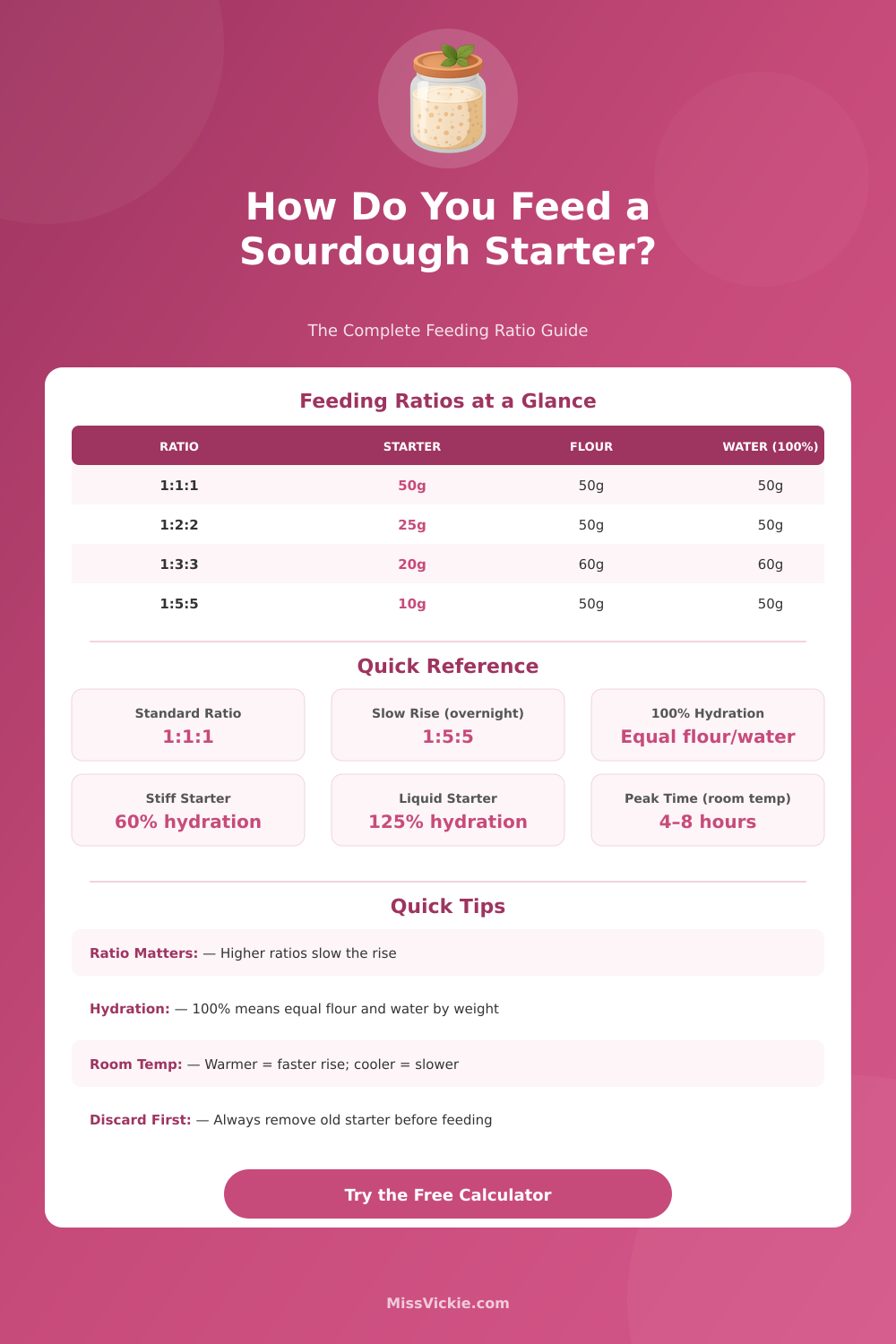
| Ratio | Starter (g) | Flour (g) | Water (g) 100% | Total (g) | Rise Time |
|---|---|---|---|---|---|
| 1:1:1 | 50 | 50 | 50 | 150 | 4–6 hrs (room temp) |
| 1:2:2 | 25 | 50 | 50 | 125 | 6–8 hrs (room temp) |
| 1:3:3 | 20 | 60 | 60 | 140 | 8–10 hrs (room temp) |
| 1:4:4 | 20 | 80 | 80 | 180 | 10–14 hrs |
| 1:5:5 | 10 | 50 | 50 | 110 | 12–16 hrs |
| 1:10:10 | 5 | 50 | 50 | 105 | 18–24 hrs |
| Hydration | Texture | Best For | Notes |
|---|---|---|---|
| 60% | Stiff dough | Bagels, pasta | Slower fermentation |
| 80% | Firm but tacky | Country loaves | Easier to shape |
| 100% | Thick batter | Standard sourdough | Most versatile |
| 125% | Pourable batter | Pancakes, waffles | Very active ferment |
| 150%+ | Liquid | Crackers, flatbreads | Fast rise; tang |
| Temperature | Rise Time (1:1:1) | Rise Time (1:5:5) | Notes |
|---|---|---|---|
| 65°F / 18°C | 8–10 hrs | 24–36 hrs | Cool kitchen |
| 70°F / 21°C | 6–8 hrs | 16–24 hrs | Typical room temp |
| 75°F / 24°C | 4–6 hrs | 12–16 hrs | Ideal range |
| 80°F / 27°C | 3–4 hrs | 8–12 hrs | Warm kitchen |
| 85°F / 29°C | 2–3 hrs | 5–8 hrs | Summer heat |
A sourdough starter is a mix of flour and water that hosts a stable group of useful bacteria and wild yeasts. It gathers the natural yeasts from the flour and from the air. You continuously feed it with regular feedings, to later use it to leaven delicious bread.
Over some days or even a week the starter collects good germs from its environment.
How to Make and Use a Sourdough Starter
To create a sourdough starter from scratch, the whole process lasts around seven days or more from the start until the finish. It does not happen fast. Initially you use whole wheat flour to quickly start the yeast.
Later, you maintain it with all-purpose flour or bread flour to cultivate the wild yeasts and good bacteria. It is possible to start with rye flour and water, then refresh every 24 hours with wheat flour and water. Avoid bleached flour, because bleaching kills the germs that you need for a succefsul starter.
On the first day you mix flour and water in a non-reactive tin, for instance glass, ceramic, stainless steel or food-grade plastic. The tin should have a half to one-quart capacity. To avoid bad molds or bacteria, sterilize the bowl with a hot dishwasher or boiling it ten minutes.
A kitchen scale helps, because it makes the feedings simpler, less messy and faster.
Feeding means spooning and dumping half of the starter, then add equal weights of flour and warm water. That is the 1:1:1 feeding ratio. Mix until it is a smooth mass, cover and leave it to rest 24 hours in warm room temperature.
Ready starter doubles in size within four to six hours after feeding. It smells nice and a bit sour, not bad. It looks bubbly and airy.
A float test helps to check readiness, a spoonful of starter in water should flow. Use it when it is thick, bubbly and wobbling like jelly when shaken.
Recipes require different amounts of starter. Some want only three spoons, others one cup or even two. For big recipes you strengthen the starter with additional feedings.
A big amount grows quickly, while a little with more flour and water slows the process.
Sourdough discard, the excess from feedings. Works for corndogs, pretzel bites, onion rings, brownies, sugar cookie bars and chocolate chip cookies. Sourdough starter is possible to use for waffles, pancakes, pizza, pasta, crackers, tortillas and cinnamon rolls.
It works for many bread styles, from dense Eastern European to baguettes.
In the refrigerator you preserve the starter after reaching maximum activity, feed it once weekly (that works well for occasional baking). Before the 19th century sourdough indeed was the only leavening thatyou had.