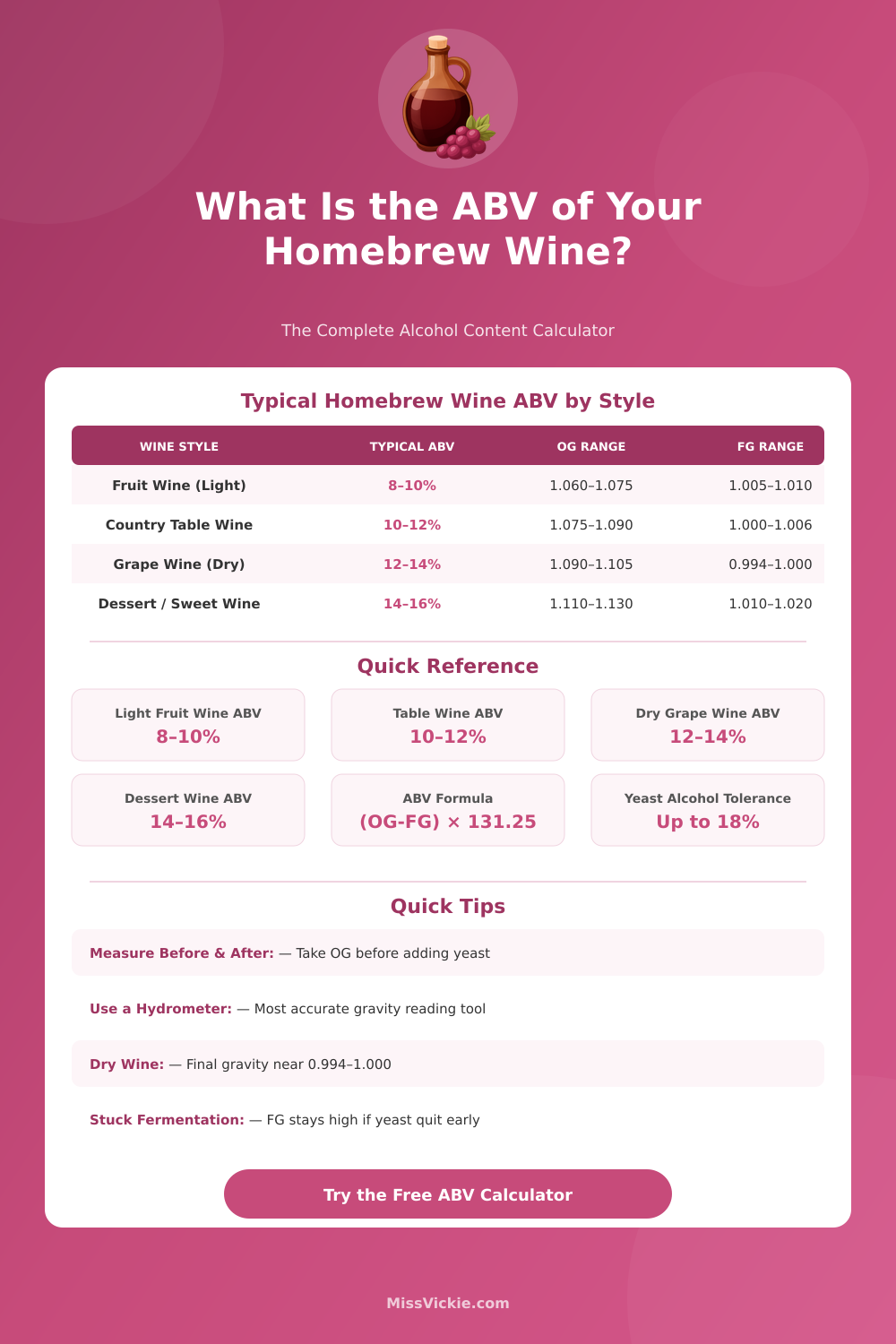
🍷 Homebrew Wine Alcohol Calculator
Calculate ABV, potential alcohol, and fermentation progress from gravity readings
| Original Gravity (SG) | Brix (°Bx) | Potential ABV (dry FG) | Typical Wine Style |
|---|---|---|---|
| 1.050 | 12.4 | ~6.5% | Very light / low alcohol |
| 1.060 | 14.7 | ~7.8% | Light fruit wine |
| 1.070 | 17.1 | ~9.1% | Light table wine |
| 1.080 | 19.3 | ~10.4% | Fruit wine / rosé |
| 1.090 | 21.6 | ~11.7% | Country / grape wine |
| 1.100 | 23.8 | ~13.1% | Dry grape wine |
| 1.110 | 26.1 | ~14.4% | Full-bodied dry wine |
| 1.120 | 28.3 | ~15.7% | Sweet / dessert wine |
| 1.130 | 30.5 | ~17.0% | Port / fortified style |
| Wine Type | OG Range | FG Range | ABV Range | Residual Sugar |
|---|---|---|---|---|
| Dry White Wine | 1.080–1.095 | 0.994–1.000 | 11–13% | Low (<4g/L) |
| Dry Red Wine | 1.090–1.105 | 0.994–1.000 | 12–14% | Very low (<2g/L) |
| Semi-Sweet Wine | 1.090–1.110 | 1.005–1.015 | 10–13% | Med (10–30g/L) |
| Sweet Wine | 1.100–1.130 | 1.015–1.025 | 10–13% | High (>45g/L) |
| Fruit Wine (dry) | 1.070–1.090 | 0.998–1.005 | 8–11% | Low (<4g/L) |
| Mead (dry) | 1.090–1.120 | 0.995–1.005 | 11–15% | Very low (<2g/L) |
| Dessert Wine | 1.110–1.140 | 1.010–1.025 | 13–16% | Very high (>80g/L) |
| Sparkling Wine | 1.080–1.095 | 0.998–1.005 | 11–13% | Low (<12g/L) |
| Reading Temp (°F) | Reading Temp (°C) | Correction to Add | Example (reads 1.090) |
|---|---|---|---|
| 50°F | 10°C | −0.001 | True SG: 1.089 |
| 60°F | 15.6°C | 0.000 (calibration) | True SG: 1.090 |
| 70°F | 21.1°C | +0.001 | True SG: 1.091 |
| 77°F | 25°C | +0.001 | True SG: 1.091 |
| 86°F | 30°C | +0.002 | True SG: 1.092 |
| 100°F | 37.8°C | +0.004 | True SG: 1.094 |
Making wine at home does not have to be rocket science although it can seem like this from the outside. When you feel comfortable with the basics, you simply mix the ingredients and leave them work while you go about your day. Everything happens thanks to little organisms that simply do what they did for thousands of years: eat sugar and give alcohol.
Here you will see those bubbles dancing on the sides of your carboy, clear signs of fermentation.
How to Make Wine at Home
Start with concentrate is the fastest way to enter winemaking. Simply pour your concentrate in the vessel you use, add water, add the yeast and the other bits from the recipe. Simple setup works well (we talk about sugar), frozen juice concentrate and yeast in a gallon jug with a latex balloon set with a rubber band as an airlock.
For good basic fermentation, take a big bucket, carboy or crock. You need at least 1.4 gallons of space so the mix does not spill during the first bubblign rise.
Here it becomes interesting: the grapes you use decide the quality of your final wine. For around 3 to 5 gallons you need roughly 40 to 50 pounds of grapes. Not everyone has fresh grapes, so homebrew stores sell pre-pressed juices year-round.
Normal winemaking gear gives around six gallons while homebrewing setups commonly reach only five. Whatever you choose, ensure that it is good quality, avoid anything that seems old or damaged.
Here is one of those quirks of real fruit wine: no two sets come out identical, even if you follow the same recipe. The sugar ranges a bit according to the fruit itself, or sometimes temperature cheats. According to the style you want, fermentation lasts around four to eight weeks.
Even so some nice wines require two years or more before they are ready to drink.
Hold your fermentation space at 65 to 75 degrees. You know it ended when the bubbles stop and everything looks clear, not cloudy. Tasting during the process is not only fun, it shows what happens in the bottle.
Fruit juices work well, and you can add pectolase or nutrients before the yeast starts.
The whole thing stays cheap, especially if you buy at farmers markets in season when juices and grapes are cheap. Basic gear costs around 50 to 100 dollars. You are not limited to grapes, mango, lemon, persimmon, blackberry and raspberry all work perfectly.
There is even a recipe with sumac that gives a citrus pink lemonade taste. Juice wines from the supermarket are ready more quickly, but they genuinely shine after some weeks in bottles.