☕ Coffee Extraction Calculator
Calculate extraction yield %, TDS, brew ratio, and quality rating for any brew method
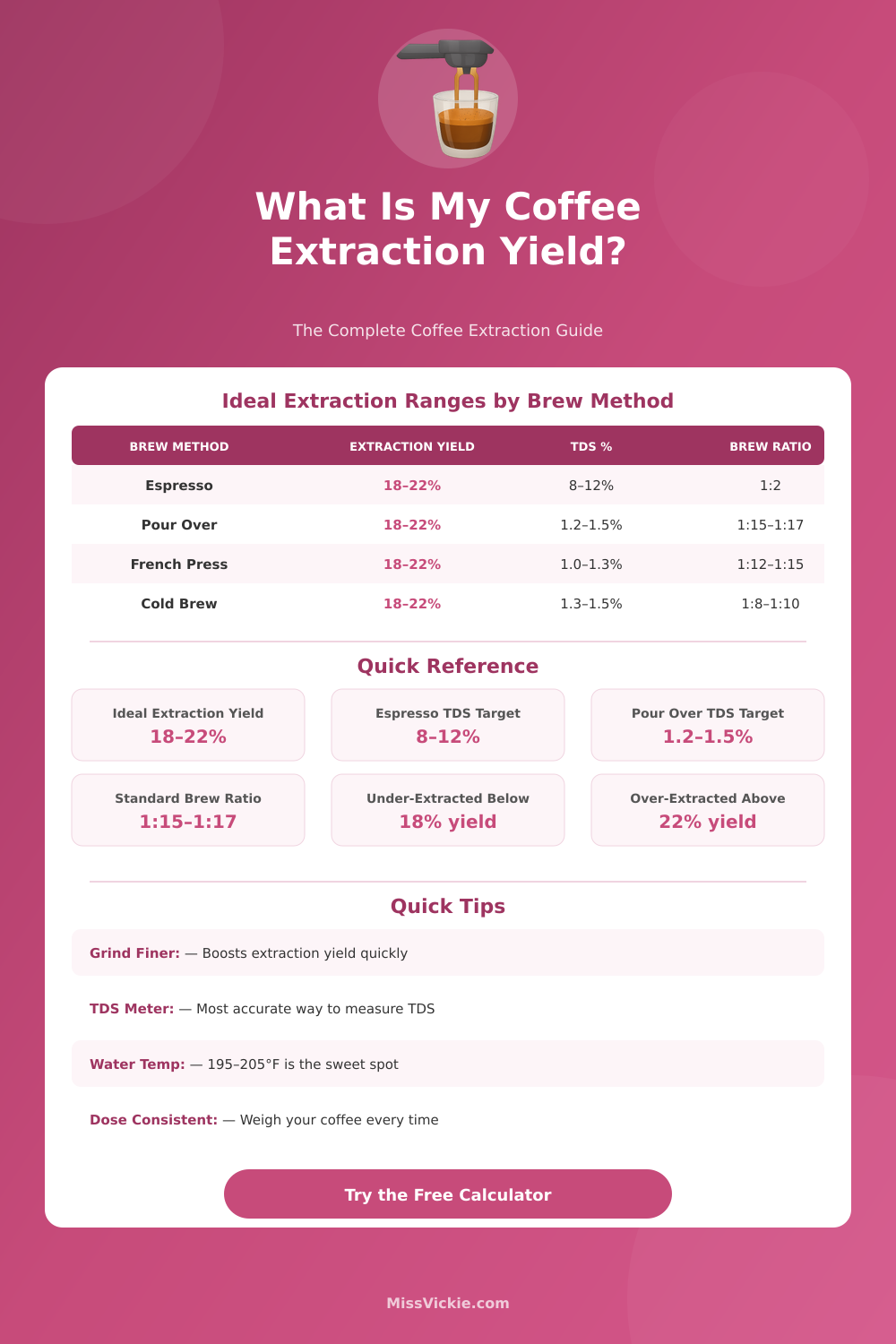
| Brew Method | Extraction Yield | TDS % | Brew Ratio |
|---|---|---|---|
| Espresso | 18–22% | 8–12% | 1:2 – 1:2.5 |
| Pour Over / V60 | 18–22% | 1.2–1.5% | 1:15 – 1:17 |
| Chemex | 18–22% | 1.2–1.4% | 1:15 – 1:17 |
| French Press | 18–22% | 1.0–1.3% | 1:12 – 1:15 |
| AeroPress | 18–22% | 1.2–1.8% | 1:10 – 1:15 |
| Drip / Filter | 18–22% | 1.15–1.45% | 1:15 – 1:18 |
| Cold Brew (conc.) | 18–22% | 1.3–1.5% | 1:8 – 1:10 |
| Moka Pot | 18–22% | 4–8% | 1:5 – 1:7 |
| TDS Range | Brew Style | Flavor Profile | Adjust By |
|---|---|---|---|
| Below 1.0% | Filter / Drip | Weak, watery | Use more coffee or less water |
| 1.15–1.45% | Filter / Drip | Balanced, ideal | No change needed |
| Above 1.5% | Filter / Drip | Strong, intense | Use less coffee or more water |
| Below 8% | Espresso | Thin, under-extracted | Grind finer, extend shot |
| 8–12% | Espresso | Rich, balanced | No change needed |
| Above 12% | Espresso | Bitter, over-extracted | Grind coarser, reduce dose |
| Ratio (Coffee:Water) | Best For | Strength | Notes |
|---|---|---|---|
| 1:2 – 1:2.5 | Espresso | Very strong | Standard double shot |
| 1:8 – 1:10 | Moka / Cold Brew conc. | Strong | Often diluted before serving |
| 1:12 – 1:14 | French Press, AeroPress | Medium-strong | Immersion methods |
| 1:15 – 1:17 | Pour Over, Drip, Chemex | Balanced | SCA golden ratio range |
| 1:18 – 1:20 | Light / Mild preference | Light | May under-extract if too high |
You see a drink from roasted and ground coffee beans, dark, bitter and with only so much bitterness that it keeps everything interesting. People really like the caffeine kick. Even so, if you want to avoid the stimulant, choose decaf.
There are many coffee replacements if you simply want to skip the real coffee
Coffee Basics: Beans, Cups and Brewing
None considers coffee a meal. It is a drink, drinkable as water, although it goes well with foods. Most folks take a cup once in the morning, because that caffeine hits hard when you want to shake off sleep.
Here it becomes weird: none agrees on what a “cup” really is. The industry calls it six ounces, but be honest, most folks order at least sixteen. Coffee makers?
They say that it is around five ounces. This play with definitions helps them a lot. A sixty-ounce water tank suddenly becomes “ten cups” instead of the real seven and half with normal eight-ounce cups.
In a coffee shop small usually means eight ounces, medium around twelve, and big is sixteen, although variations exist. Want to know how much coffee feeds a crowd? A gallon gives around sixteen eight-ounce cups, good for big groups.
Add a scoop to the brew seems to give more punch, but it does not work like this. You simply get more taste from what already is, without adding the caffeine. Ultimately you have something more bitter.
That is it.
Turkish coffee deserves attention, because it has such a focused brewing style, that it really strengthens both caffeine and taste. Coffee lovers occasionally mix a spoon of hazelnut or chocolate powder to deepen it. Also exists the liqueur angle; Kahlúa and alike shine with ice, milk, cream or almond milk, making them good after-dinner sips.
Changing from a traditional stovetop moka pot to an electric one can really squeeze more out of your coffee and improve taste. Pourover wins big popularity. The Speciality Coffee Association of Europe advise sixty grams of coffee for a liter of water.
For a two-hundred-millilitre cup that makes around twelve grams of grounds.
Good coffee starts with good beans and water that tastes right, plus a good brewing method. Better beans give better coffee, if nothing fails. Used grounds do not necessarily have to be dumped.
They bake well in bread, especially with rye, oats and sourdough starter. Some beans roasted at City+ level hit you with strong blueberry notes. You also can add hints of mint, cocoa and cinnamon to smooth out whatever is inyour cup.