🍰 Buttercream Frosting Calculator
Get exact ingredient amounts for any cake size, cupcake batch, or frosting style
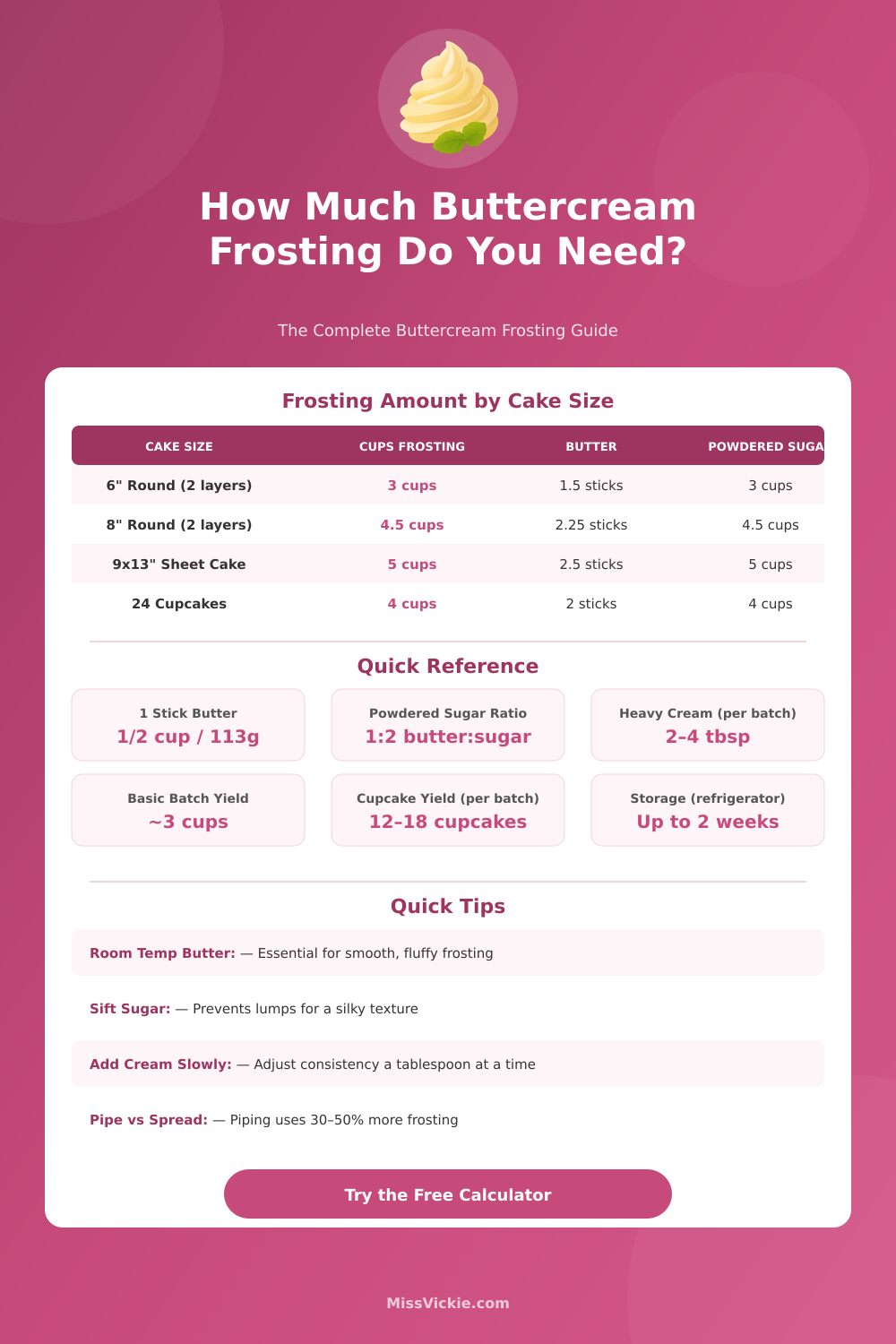
| Cake Size | 2 Layers | 3 Layers | 4 Layers |
|---|---|---|---|
| 6" Round | 3 cups | 4 cups | 5 cups |
| 8" Round | 4.5 cups | 6 cups | 7.5 cups |
| 9" Round | 5 cups | 7 cups | 9 cups |
| 10" Round | 6 cups | 8 cups | 10 cups |
| 12" Round | 8 cups | 11 cups | 14 cups |
| 9x13" Sheet | 5 cups (single layer top + sides) | ||
| 12x18" Half Sheet | 8 cups (single layer top + sides) | ||
| Cupcakes | Spread (swirl) | Piped (star tip) | Piped (tall rose) |
|---|---|---|---|
| 12 cupcakes | 1.5 cups | 2 cups | 3 cups |
| 24 cupcakes | 3 cups | 4 cups | 6 cups |
| 36 cupcakes | 4.5 cups | 6 cups | 9 cups |
| 48 cupcakes | 6 cups | 8 cups | 12 cups |
| Buttercream Type | Butter | Sugar / Base | Liquid |
|---|---|---|---|
| American | 1 cup (2 sticks) | 4 cups powdered sugar | 2–4 tbsp cream |
| Swiss Meringue | 1.5 cups (3 sticks) | 1.25 cups egg whites + 1.5 cups sugar | None |
| Italian Meringue | 1.5 cups (3 sticks) | 1.5 cups sugar + water | None |
| Ermine (Flour) | 1 cup (2 sticks) | 1 cup sugar + 5 tbsp flour + 1 cup milk | 1 cup milk |
| German | 1 cup (2 sticks) | 1.5 cups pastry cream | Via pastry cream |
| US Measure | Metric (approx.) | Notes |
|---|---|---|
| 1 stick butter | 113g / 4 oz | = 1/2 cup |
| 1 cup powdered sugar | 120g | Sifted |
| 1 tbsp heavy cream | 15ml | Or whole milk |
| 1 tsp vanilla extract | 5ml | Pure preferred |
| 1 cup butter | 227g | = 2 sticks |
| 1 batch (basic) | ~3 cups | Frosts 12–18 cupcakes |
Buttercream frosting is simply butter mixed with powdered sugar until it becomes smooth and creamy. It ranks among the simplest frostings genuinely, it works for cakes, cupcakes, cookies, whatever you want. The secret is beating the butter, sugar and milk with a mixer until you get that soft, fluffy frosting ideal for decorating
American buttercream is without doubt the most liked. It stands out because of the thin crust that forms, and that is why it stays well under fondant or as filling, because it keeps its shape surprisingly on cupcakes. Mind though.
Buttercream Frosting Basics
It always will be quite sweet. First beat the butter pale and fluffy, then add the powdered sugar step by step while you mix, until no grit stays. Finally, add a bit of milk and mix until everything blends.
For the best result, use sifted confectioner’s sugar.
Cream usually beats milk for buttercream, especially if you want to pipe it. It gives a much more firm texture and is simply easier to handle. Also the vanilla matters: from mock essence until pure vanilla, paste or whole beans.
Enough chances to try what most please your taste.
Chocolate version requires only six ingredients and gives rich chocolate with smooth, creamy make-up. One batch suffices to frost a three-layer cake or around thirty-two cupcakes. On the other hand, vegan buttercream pipes just as well, tastes surprisingly real, with only four ingredients.
For the vegan, cool the vegan butter in the refrigerator at least twenty minutes before blending.
One batch. Around six to seven cups. Widely works for a nine-inch cake or two dozen cupcakes.
For individual cupcakes, two to three tablespoons each one works well. If you use a pastry bag with swirls, one batch frosts roughly fifteen to eighteen cupcakes, according to size of the swirls.
The yellow hue in buttercream? Inevitable, because butter and powdered sugar mix to that buttery golden colour. A mixer helps a lot, but it can trap air if you do not care.
My trick: fill the mixer bowl high, so there stays less space for air, and you get silky, bubble-free frosting.
Buttercream does not require to immediately go in the refrigerator. It stays good at room temperature until two days, max forty-eight hours. After that, refrigerate it.
Leftover frosting lasts in the refrigerator and works well for future projects. Note this: mixing butter with shortening (fifty-fifty) helps the frosting stay firm even when warm, because shortening has a higher melting point than butter.