🍣 Sushi Rice Seasoning Calculator
Calculate perfect vinegar, sugar, and salt ratios for any amount of sushi rice
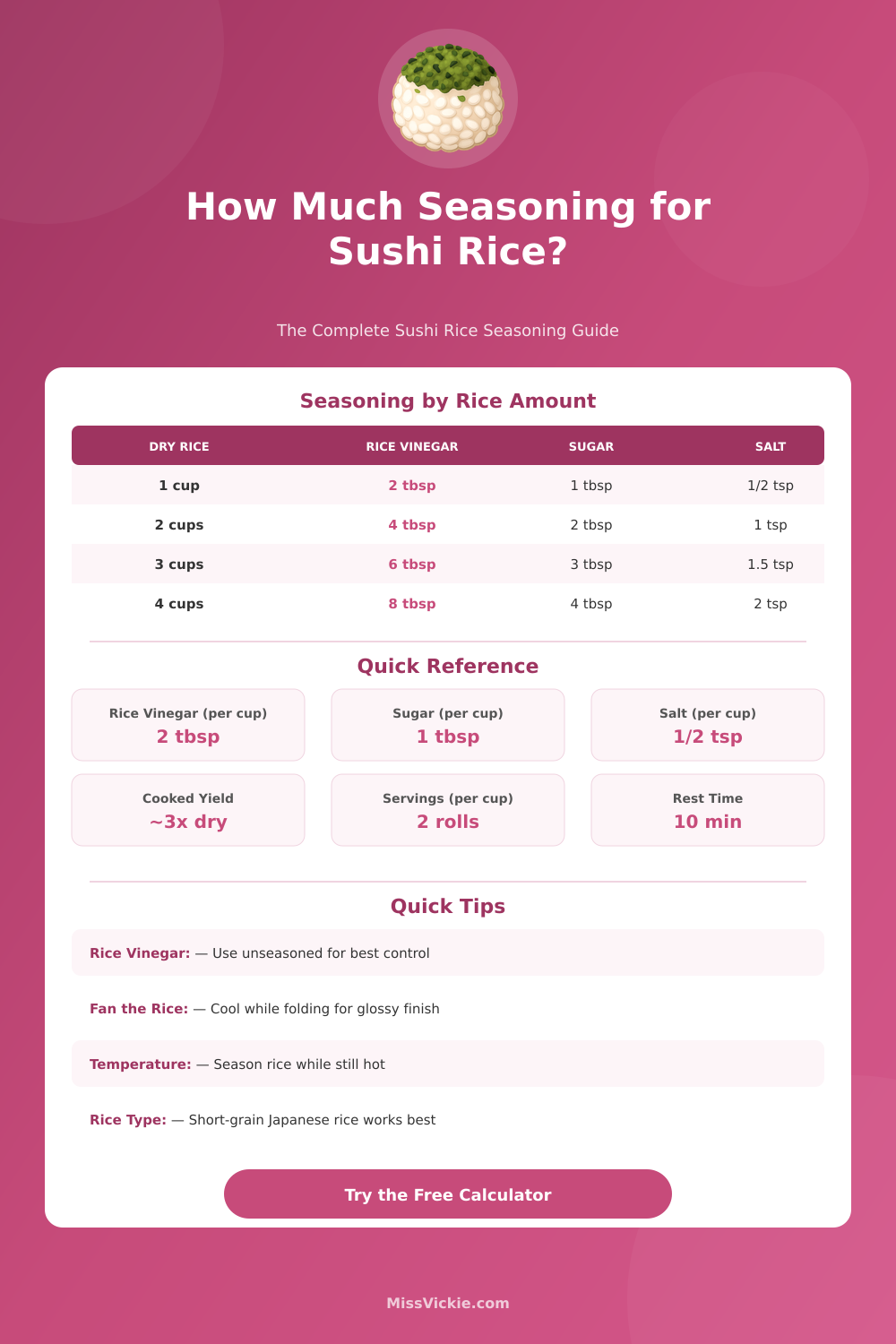
| Dry Rice | Rice Vinegar | Sugar | Salt | Rolls (approx) |
|---|---|---|---|---|
| 0.5 cup (100g) | 1 tbsp | 1.5 tsp | 1/4 tsp | 1 roll |
| 1 cup (200g) | 2 tbsp | 1 tbsp | 1/2 tsp | 2 rolls |
| 1.5 cups (300g) | 3 tbsp | 1.5 tbsp | 3/4 tsp | 3 rolls |
| 2 cups (400g) | 4 tbsp | 2 tbsp | 1 tsp | 4 rolls |
| 3 cups (600g) | 6 tbsp | 3 tbsp | 1.5 tsp | 6 rolls |
| 4 cups (800g) | 8 tbsp | 4 tbsp | 2 tsp | 8 rolls |
| 5 cups (1000g) | 10 tbsp | 5 tbsp | 2.5 tsp | 10 rolls |
| Vinegar Type | Flavor Profile | Adjust Sugar? | Best For |
|---|---|---|---|
| Rice Vinegar (unseasoned) | Mild, slightly sweet | No change | Traditional sushi, best result |
| Seasoned Rice Vinegar | Pre-sweetened | Reduce by 50% | Quick prep, convenience |
| Apple Cider Vinegar | Fruity, tangier | Slight reduction | Good substitute |
| White Wine Vinegar | Crisp, neutral | No change | Acceptable substitute |
| White Distilled Vinegar | Sharp, strong | Reduce by 25% | Use sparingly, last resort |
| Style | Vinegar (per cup) | Sugar (per cup) | Salt (per cup) | Notes |
|---|---|---|---|---|
| Standard (classic) | 2 tbsp | 1 tbsp | 1/2 tsp | Authentic Japanese balance |
| Sweet style | 2 tbsp | 1.5 tbsp | 1/2 tsp | Milder, slightly sweeter |
| Light season | 1 tbsp | 1/2 tbsp | 1/4 tsp | Lower calorie, subtler taste |
| Rice cooker | 2.5 tbsp | 1 tbsp | 1/2 tsp | Slightly more vinegar for denser rice |
At the heart of sushi stands the rice. The word “sushi” comes from Japanese and means “sour-tasting”, that sourness comes from the vinegar that you mix with the rice. You also call it “rice with vinegar” or simply “sour rice” Here the secret: everything made with that rice is sushi, with fish or without it.
Sashimi on the other hand is different. It is raw meat, cut specially.
How to Make Good Sushi Rice
In Japan finding great fish is not a problem. What really tells the best sushi spots from the others? They have perfect rice.
Good sushi rice stays soft but keeps its form, with grains that stick naturally, without becoming sticky or mushy. Preparing rice is seen as one of the hardest arts in the sushi world. According to my reads, students in Japan spend around five years under a master before you trust them with the rice.
All masters keep their recipe as a trade secreet (and that makes sense).
When you cook it, sushi rice becomes bright, sticky and nicely chewy. But the real difference comes after you take the pot off the heat. Then you add sweetened vinegar, that not only seasons the grains, but gives gloss and stickiness.
Main part: use short grain rice, long grain or other kinds simply do not work. In good sushi shops commonly appear Sasanishiki or Koshihikari, occasionally mixed from different harvests of past and current seasons to reach precise quality. CalRose, medium Japanese kind from California, works also surprisingly well.
Rinse the rice is not an option. Even with a small amount, the whole work lasts under three minutes if you move quickly. Problem is, it still stays a bit sticky.
The 10-5-5 way is a reliable method. Boil the rice covered on medium-high heat for ten minutes, later drop to medium-low and cook covered for five minutes, finally turn off the heat, but leave the cover on for another five minutes. After cooking, pour everything in a broad, shallow bowl and spread it thin with a wooden or plastic tool.
Pour the vinegar mix on top and gently mix it in. Leave it twenty to thirty minutes, moving it occasionally, that helps steam escape and cool well.
Cold rice creates problems. It loses the sweet, which ruins the whole sushi experience and messes with other tastes. When you dip sushi in soy sauce, touch only the edge of the fish, not the rice.
Otherwise everything falls apart. Some pieces do not need sauce. One raw cup of sushi rice gives almost three rolls, and every roll gives six to eight pieces.
Two rolls per person usually fitright.