🍞 Homemade Sourdough Nutrition Calculator
Calculate calories, protein, carbs, fat, and fiber per slice based on your recipe
| Flour Type | Calories | Protein | Carbs | Fat | Fiber |
|---|---|---|---|---|---|
| White / Bread Flour | 265 kcal | 9g | 52g | 1.5g | 2g |
| Whole Wheat | 225 kcal | 10g | 44g | 2g | 6g |
| Rye | 210 kcal | 8g | 42g | 1.5g | 7g |
| Seeded (White + Seeds) | 290 kcal | 11g | 48g | 5g | 5g |
| Multigrain | 240 kcal | 10g | 46g | 2.5g | 5g |
| Spelt | 250 kcal | 11g | 50g | 2g | 4g |
| Einkorn | 236 kcal | 10g | 47g | 2g | 4g |
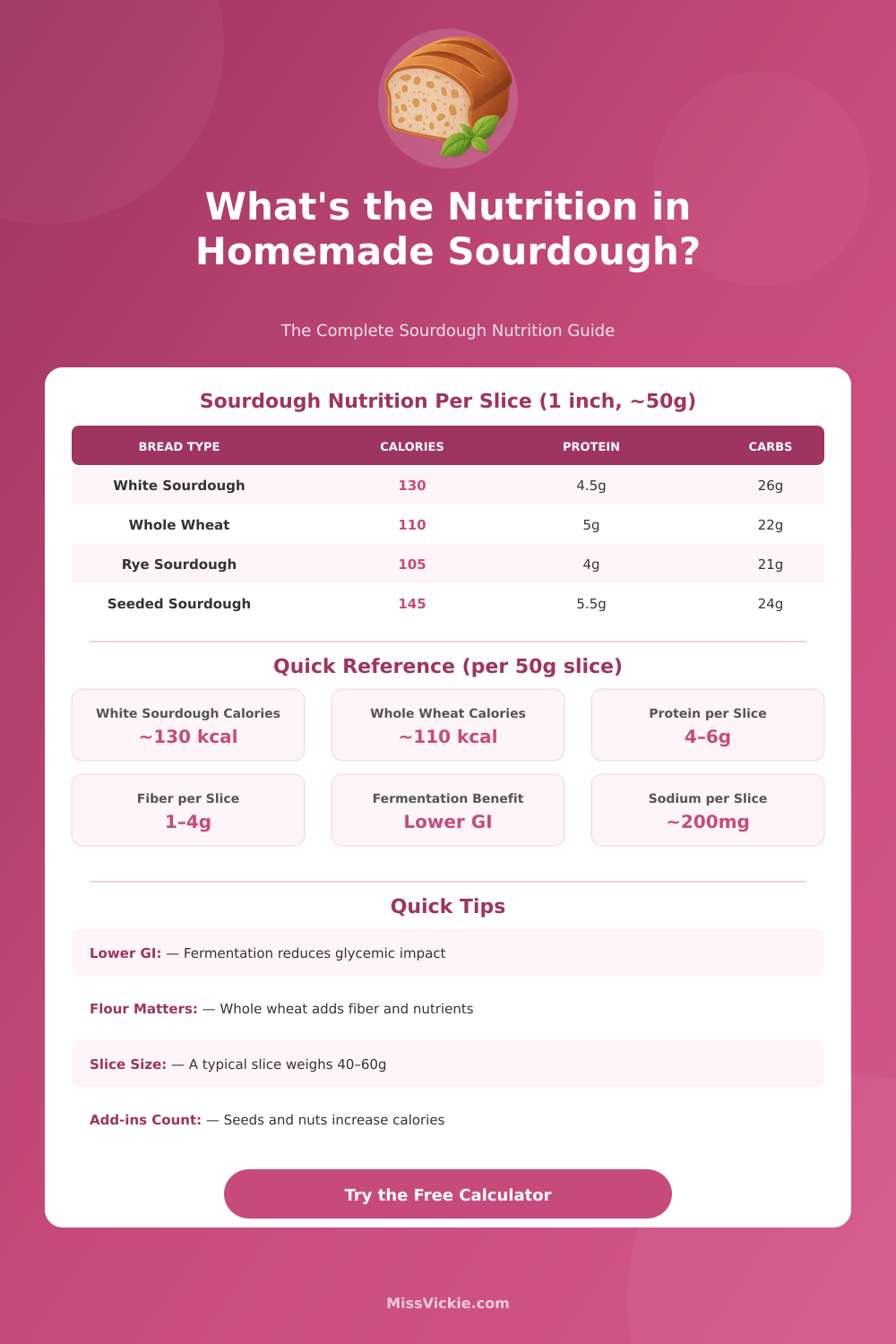
| Bread Type | Calories | Protein | Fiber | GI Score |
|---|---|---|---|---|
| Homemade Sourdough (white) | 130 | 4.5g | 1g | ~54 (Medium) |
| Homemade Sourdough (whole wheat) | 110 | 5g | 3g | ~48 (Low) |
| Commercial White Bread | 133 | 4g | 0.6g | ~75 (High) |
| Commercial Whole Wheat Bread | 121 | 5g | 2g | ~69 (Medium) |
| Baguette (no sourdough) | 138 | 5g | 0.8g | ~95 (Very High) |
| Rye Crispbread | 105 | 3g | 4g | ~45 (Low) |
| Loaf Slices | Slice Weight (500g loaf) | Calories (white) | Calories (whole wheat) |
|---|---|---|---|
| 8 slices | ~62g | ~165 kcal | ~140 kcal |
| 10 slices | ~50g | ~133 kcal | ~113 kcal |
| 12 slices | ~42g | ~111 kcal | ~95 kcal |
| 14 slices | ~36g | ~95 kcal | ~81 kcal |
| 16 slices | ~31g | ~82 kcal | ~70 kcal |
Sourdough bread is bread that ferments naturally using a sourdough starter instead of commercial yeast or chemical agents like baking powder or baking soda. Alive culture from flour and water forms the starter that naturally raises the dough. You can make it, buy it or receive it from another baker
Naturally happening yeast and bacteria raise the mass in sourdough. They produce lactic acid that gives the bread its taste. That a bit bitter, racy aroma of the starter simply sticks.
What is sourdough bread?
Proteins in sourdough bread are more easily digestible for the body. The culture breaks down glutenin and gliadin so the bread becomes more tolerabel. It also destroys phytates that stop the absorption of minerals.
Good sourdough has light, airy insides and crisp brown crust outside. Classical recipe gives oval pain au levain with light sharpness and rich flavor.
Simple method for sourdough gives surprisingly racy results and is entirely soft. Without feeding of the starter, without kneading of the mass and without shaping of the loaf. Only mix, wait, lay the dough in a pan, wait more and bake a big loaf for sandwiches.
Strong white flour of good quality works for newcomers.
Common proportion for sourdough is 1:2:3, so one part starter, two parts water, three parts flour, everything by weight. Salt goes in at two percent of the flour mass. For instance: 100 g starter, 200 g water, 300 g flour and 6 g salt.
Other recipe uses 290 g water, 400 g flour, two spoons of salt and 90 g starter. Mix by hand in a bowl, leave it 20 minutes, later add salt and mix again.
For starter from scratch, mix two spoons whole grain flour with two spoons unsweetened pineapple juice or orange juice. Cover and leave at room temperature 24 hours. It requires both yeast and bacteria.
Yeast are not bacteria (they are fungi).
Sourdough is fun like a science experiment in the kitchen. It tastes good, which is enough. Before the 19th century it was the only available leavening.
You believe that it dates from around 10 000 BC. Home baking such bread from scratch are among the most thrilling things.