🧂 Lacto Fermentation Brine Calculator
Calculate exact salt and water amounts for safe, delicious lacto-fermented vegetables
Cabbage, Kimchi
Peppers, Carrots
Pickles, Garlic
Long-term storage
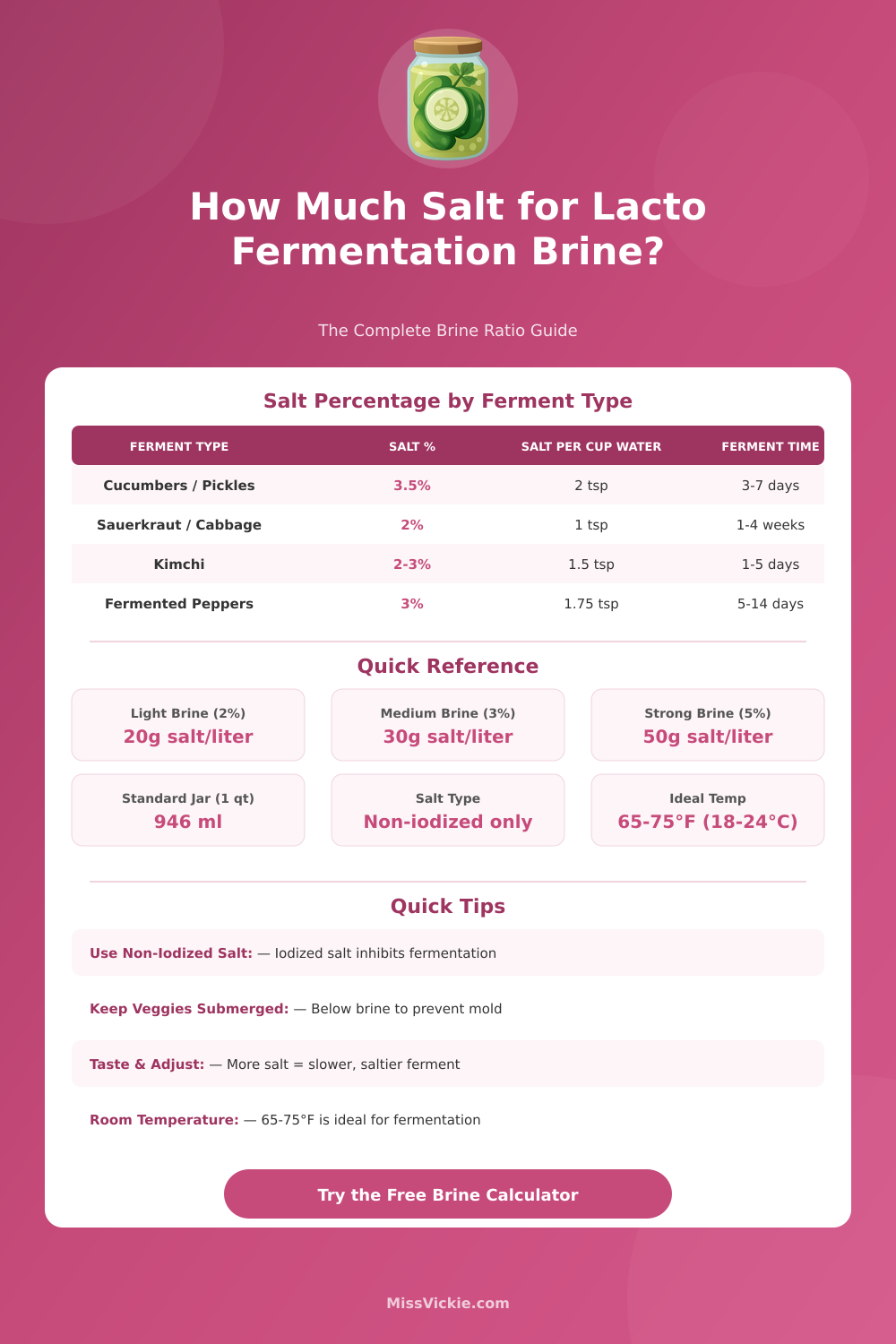
| Vegetable | Recommended Salt % | Salt per 1 cup water | Ferment Time |
|---|---|---|---|
| Cucumbers / Pickles | 3.5% | 2 tsp (12g) | 3-7 days |
| Cabbage / Sauerkraut | 2% | 1 tsp (6g) | 1-4 weeks |
| Kimchi | 2-2.5% | 1.25 tsp (7.5g) | 1-5 days |
| Peppers / Hot Sauce | 3% | 1.75 tsp (10g) | 5-14 days |
| Garlic Cloves | 3.5% | 2 tsp (12g) | 2-4 weeks |
| Carrots | 2.5% | 1.5 tsp (8g) | 3-7 days |
| Beets | 2% | 1 tsp (6g) | 3-5 days |
| Green Beans (Dilly) | 3% | 1.75 tsp (10g) | 3-7 days |
| Radishes | 2% | 1 tsp (6g) | 2-4 days |
| Jar Size | Water Needed | Salt at 2% | Salt at 3% | Salt at 3.5% |
|---|---|---|---|---|
| Half Pint (8 oz) | 240 ml / 1 cup | 4.8g / 0.9 tsp | 7.2g / 1.3 tsp | 8.4g / 1.5 tsp |
| Pint (16 oz) | 473 ml / 2 cups | 9.5g / 1.7 tsp | 14.2g / 2.5 tsp | 16.6g / 3 tsp |
| Quart (32 oz) | 946 ml / 4 cups | 18.9g / 3.4 tsp | 28.4g / 5.1 tsp | 33.1g / 6 tsp |
| Half Gallon (64 oz) | 1893 ml / 8 cups | 37.9g / 6.8 tsp | 56.8g / 10.2 tsp | 66.3g / 11.9 tsp |
| Gallon (128 oz) | 3785 ml / 16 cups | 75.7g / 13.6 tsp | 113.6g / 20.4 tsp | 132.5g / 23.8 tsp |
| Salt Type | 1 tsp Weight | Notes | Best For |
|---|---|---|---|
| Fine Sea Salt | ~6g | Dissolves quickly, no additives | All ferments |
| Kosher Salt (Diamond Crystal) | ~2.8g | Flaky, large crystals | All ferments |
| Kosher Salt (Morton) | ~4.8g | Denser than Diamond Crystal | All ferments |
| Pickling Salt | ~6g | Extra fine, no additives | Pickles, brine |
| Himalayan Pink Salt | ~5.5g | Trace minerals, slightly different flavor | All ferments |
| Coarse Sea Salt | ~7.5g | Slower to dissolve, weigh for accuracy | Dry salting |
Lacto-fermentation is one of the oldest ways to prepare foods. It is a kind of fermentation that helps bacteria produce lactic acid to preserve meats and vegetables. Folks used this for thousands of years and many people across the world used it according to their custom.
You can apply it on raw or cooked vegetables
Simple Guide to Lacto-Fermentation
“Lacto” in lacto-fermentation relates to bacteria of the genus lactobacillus. They break the sugars from foods and create lactic acid. The name “lactic acid” comes from the fact that you found it first in milk which has the sugar lactose.
That is the main kind of fermentation for preserving and pickling foods.
Traditional dill pickles, kimchi and real sauerkraut come from lacto-fermentation. Also olives and grape leaves prepared by tradition pass through this procse. In the stores it helps to produce yogurt and buttermilk.
Lactobacillus gives that special tang to sourdough bread.
For the simple process you only require salt, vegetables or fruits and water. Nothing else. You submerge the vegetables and fruits in a solution of salt and water or salt them enough so they release their water and form the solution.
The salt helps good bacteria grow and stops the bad. Too much salt kills mold and harmful germs but lactobacillus thrives here.
Lacto-fermentation happens without oxygen. Glass weights keep the vegetables under the brine, which stops mold, that is key. During fermentation of vegetables, use four small jars instead of one big one.
If one fails, you do not need to dump everything. A good size to start is 250 ml, or one cup.
The minimum time for lactic acid fermentation is around four days. Later it depends on your taste, the heat, the size and kind of vegetables and the salt. Botulism is not a risk with lacto-fermentation.
If something goes wrong, you could easily see or smell it by way of scent.
Bacteria of lactic acid help also for dried meats as prosciutto and sausage. Fermented nuts work for vegan cheese. Lacto-fermenting garlic mellows its force between raw and roasted.
Fermented vegetables cook well… Grilled, roasted, baked, boiled or fried. Cooking a bit softens the bite.
The trouble is in choosing which vegetable to use, but the method is forgiving enough that you can experiment a lotof.