🍺 Homebrew Efficiency Calculator
Calculate mash efficiency, brewhouse efficiency, and extract yield for your homebrew batches
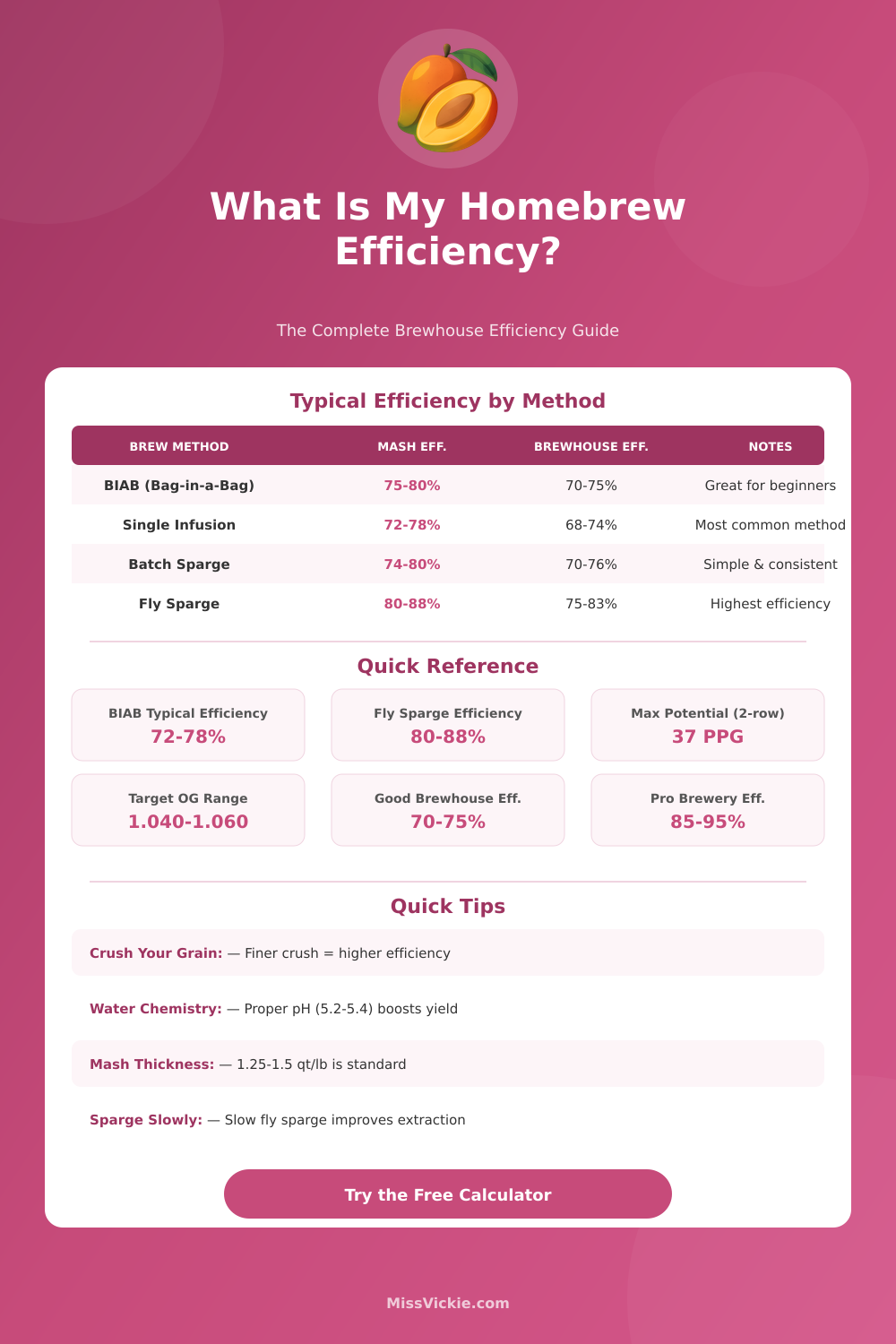
| Brew Method | Mash Eff. | Brewhouse Eff. | Best For |
|---|---|---|---|
| BIAB (Brew-in-a-Bag) | 75-80% | 70-75% | Beginners, small batches |
| Single Infusion | 72-78% | 68-74% | Most home brewers |
| Batch Sparge | 74-80% | 70-76% | Simple & consistent |
| Fly Sparge | 80-88% | 75-83% | Maximum extract yield |
| No-Sparge | 60-70% | 58-66% | Simple, quick brews |
| Malt Type | PPG (Points per Pound per Gallon) | Best Use |
|---|---|---|
| American 2-Row | 37 | Most ale styles |
| 6-Row Pale Malt | 36 | Adjunct-heavy beers |
| Pilsner Malt | 37 | Lagers, light ales |
| Maris Otter | 36 | British ales |
| Vienna Malt | 35 | Vienna lager, Marzen |
| Munich Malt | 34 | Dark lagers, bocks |
| Wheat Malt | 32 | Wheat beers, Hefeweizen |
| Rye Malt | 29 | Rye ales, rye IPA |
| OG Reading | Gravity Points | Beer Style Range |
|---|---|---|
| 1.030 - 1.040 | 30 - 40 | Session ales, light beers |
| 1.040 - 1.052 | 40 - 52 | American ales, wheat beers |
| 1.052 - 1.065 | 52 - 65 | IPAs, porters, stouts |
| 1.065 - 1.080 | 65 - 80 | Strong ales, Belgian dubbel |
| 1.080 - 1.100 | 80 - 100 | Imperial stouts, barleywines |
| 1.100+ | 100+ | Extreme big beers |
Homebrewing is everything about the art of making beer, wine, cider and mead in your own home. It is a hobby that combines brewers, mazers, vintners and cider makers from all walks of life. The whole community works for a big goal: a homebrewer in every neighborhood and a homebrew club in every city.
What unites all of us is the same goal: enjoy and promote the art, science and simple pleasure of fermentation while we feed a community of homebrewers, those that do it today and those that will start tomorrow
Homebrewing Basics and How to Start
Here is something that many do not know: home beer brewing was not even legal at a federal level until 1978. Before Prohibition closed everything, it was entirely normal, and George Washington himself made beer at home. That historic background gives the whole hobby a bit deeper feeling.
The usual amount in homebrew recipes is 19 liters, or 5 gallons, if you think in American measures. Here is the reason: many homebrewers like to keep their beer in Cornelius kegs, which hold exactly that volume. If you are entirely new, though, start with a 2.5-gallon brew-in-a-bag setup, that could be the best way to enter all-grain brewing.
Honestley, it often ends up being the ideal amount for all.
There is a lot of traditional advice about how you “should” brew beer. The truth? Experiment and adapt as you go works surprisingly well.
Blogs and online communities are treasures for answers to your questions. Here you find forums about general homebrewing, all-grain methods, recipe swaps, wine making and mead making without big effort. There are also forums about beer, where you exchange recipes, gear and equipment for sale.
In the United Kingdom there are also some big, friendly groups, where discussions deal with everything from grain brewing, extracts and kits to wine and cider.
These spaces help you discuss yeast issues, grain selections, kits and all other materials that come up. Many start by browsing popular websites, then create own recipes according to what pleases their eye and what they learned practicing. Tools like homebrew recipe designers, brewing software, batch calculators, brew day planners and brewing journals help makers perfect their craft every time.
Starter kits and beer recipes are a good way to start and learn. Getting brewing supplies and great ingredients for beer and wine is easy today. Sharing recipes is where the funniest part happens.
You can sort them by style and receive opinions of others about your own that you posted online; that simply improves the whole experience.
Some homebrewers go further and cook with their beer. For instance, homemade beer mustard needs only beer, mustard seeds and a food processor. Local homebrew shops commonly have a wide selection of barley malts and unusual grains like wheat, rye and spelt…
Ingredients that work also for bread. One funny attempt is bread from homebrew mash, but warning: the loaf can come out too wet and stay doughy in the middle.