🍊 Vitamin C in Mandarin Orange Calculator
Calculate vitamin C content by mandarin type, serving size, and number of servings
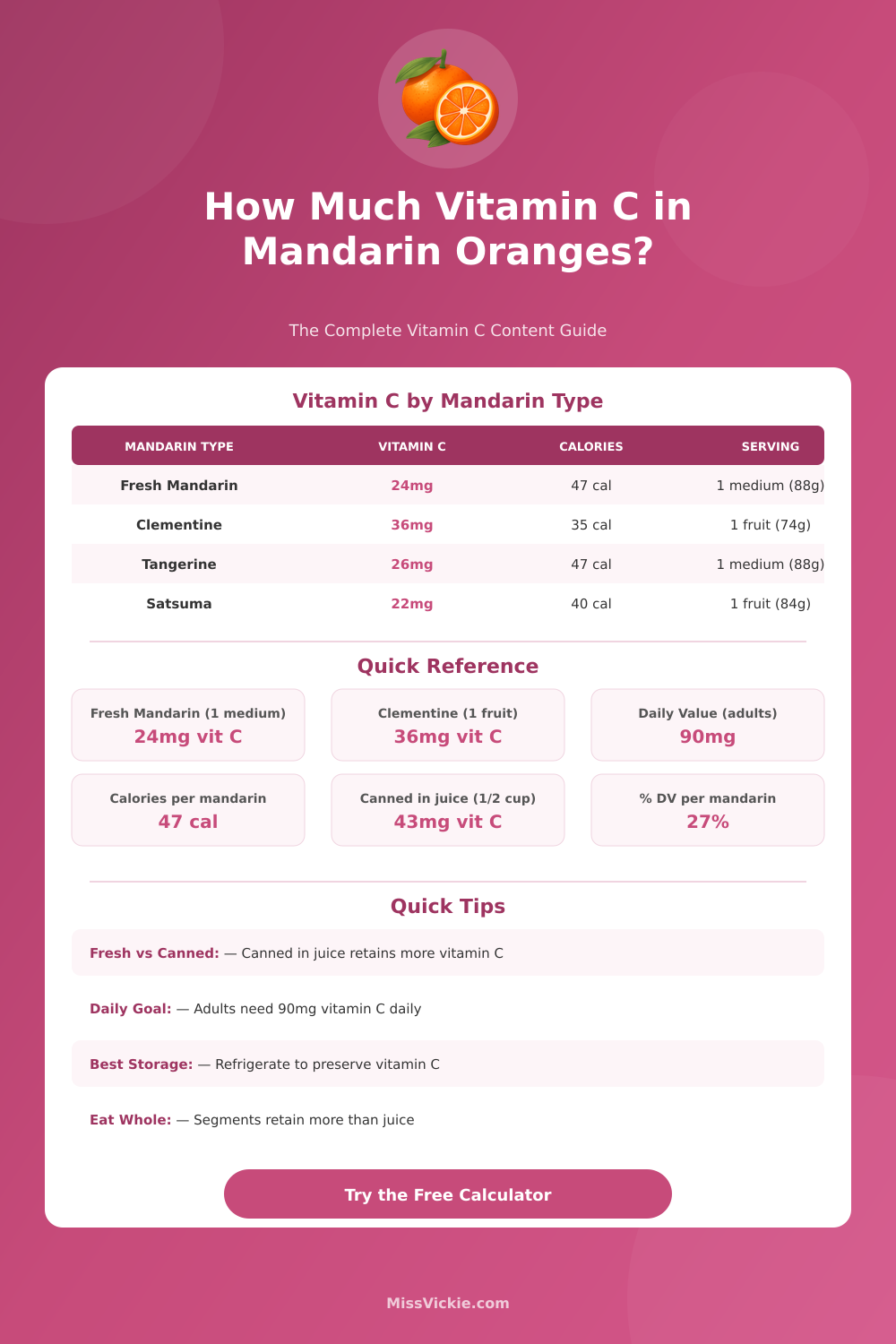
| Mandarin Type | 1 Fruit | 2 Fruits | 3 Fruits | 4 Fruits |
|---|---|---|---|---|
| Fresh Mandarin | 24mg | 48mg | 72mg | 96mg |
| Clementine | 36mg | 72mg | 108mg | 144mg |
| Tangerine | 26mg | 52mg | 78mg | 104mg |
| Satsuma | 22mg | 44mg | 66mg | 88mg |
| Cuties Brand | 36mg | 72mg | 108mg | 144mg |
| Citrus Fruit | Vitamin C | Calories | Notes |
|---|---|---|---|
| Mandarin Orange (88g) | 24mg | 47 | Easy to peel, mild flavor |
| Navel Orange (140g) | 83mg | 69 | Highest vitamin C per fruit |
| Grapefruit, half (123g) | 39mg | 52 | Tart, good for breakfast |
| Lemon, 1 medium (58g) | 31mg | 17 | Used in drinks and cooking |
| Lime, 1 medium (67g) | 19mg | 20 | Lower vitamin C than lemon |
| Clementine (74g) | 36mg | 35 | Seedless, kid-friendly |
Mandarin Orange form little, round citrus fruits that belong to the same group as regular oranges, lemons, limes and grapefruits. They have sweet taste, much juice and are very simple to peel. Compared to typical oranges, that are round, these have flatter and compact form.
The skin colors strongly orange seem leather-like and protect the sweet, juicy parts inside.
All About Mandarin Oranges
Reportedly, Mandarin Orange come from old China, from which they received their name. In Chinese writings one first mentions them around the year 300 BC. They rank between the three main ancestors of citrus fruits, together with pomelo and citron.
Almost all other species of citrus fruits are hybrids, that come from those three basic knids. Hence oranges are actually a kind of Mandarin Orange, and not the other way.
Satsumas, tangerines and clementines all belong to the Mandarin Orange group. The term tangerine commonly means types with more dark skin color. Clementines, that sometimes one sells as Cuties or Halos, are sweet, seedless and easy to peel.
They usually have stable good quality. Ponkan Mandarin Orange measure around seven to eight centimeters across, they are thick and offer sweet, juicy flesh.
Oranges are bigger and store more liquid. Also there taste is a bit sour. Mandarin Orange seem sweeter not because of more sugar, but because of less bitterness.
That reduced bitter level lets the sweetness come through more clearly. Sweet oranges work well for juicing, while Mandarin Orange more suit for eating as a quick snack.
Mandarin Orange grow best in gentle climates with a bit of cold, for instance in north Florida, Louisiana or the coast of Texas. Types like Owari Satsuma, Gold Nugget and Clementine work surprisingly well for growing in pots at home.
Mandarin Orange are healthy and rich in Vitamin C. They have calcium, fiber and a low amount of carbs. Each of them has only around 35 calories. Eating two or three daily makes an ideal amount.
Mandarin Orange work perfectly as a standalone snack, but they also go well in many recipes. A small amount of Mandarin Orange segments add fruit sweetness to coleslaw. In salads with green leaves, protein foods and thin meat they go surprisingly well.
Bread from Mandarin Orange comes out moist, clear and bright, with tropical, fresh smell. Canned Mandarin Orange go well in desserts like gelatin or fruit fluff. The skin itself is very tasty and is useful for tea or for making glaze withpowdered sugar and Mandarin Orange juice.