🍋 Vitamin C in Lemon Calculator
Calculate vitamin C content by serving type, quantity, and daily value percentage
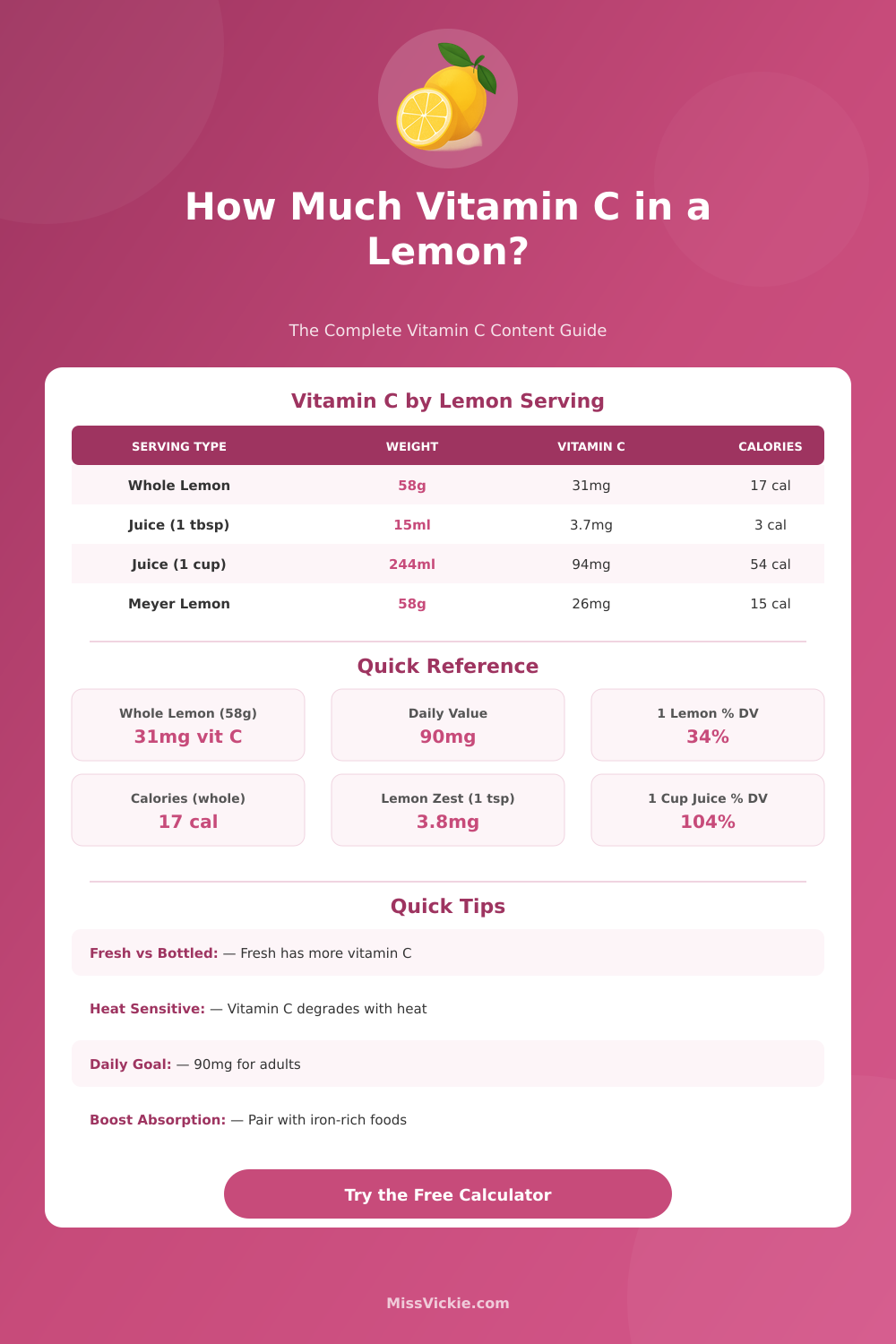
| Serving Type | 1 Serving | 2 Servings | 3 Servings |
|---|---|---|---|
| Whole Lemon (58g) | 31mg | 62mg | 93mg |
| Juice (1 tbsp / 15ml) | 3.7mg | 7.4mg | 11.1mg |
| Juice (1 cup / 244ml) | 94mg | 188mg | 282mg |
| Zest (1 tsp / 2g) | 3.8mg | 7.6mg | 11.4mg |
| Half Lemon (29g) | 15.5mg | 31mg | 46.5mg |
| Lemon Wedge (8g) | 4.3mg | 8.6mg | 12.9mg |
| Bottled Juice (1 tbsp) | 3.1mg | 6.2mg | 9.3mg |
| Meyer Lemon (58g) | 26mg | 52mg | 78mg |
| Fruit | Vitamin C (per 100g) | Calories (per 100g) | Notes |
|---|---|---|---|
| Lemon (with peel) | 53mg | 29 | Juice and zest both useful |
| Orange | 53mg | 47 | Most popular citrus source |
| Grapefruit | 31mg | 42 | Lower vitamin C than lemon |
| Lime | 29mg | 30 | Similar to lemon, slightly less |
| Tangerine | 27mg | 53 | Sweeter but less vitamin C |
| Meyer Lemon | 45mg | 26 | Sweeter hybrid variety |
The Lemon are bright yellow fruit from the citrus group, that belongs to the family Rutaceae. It is a hybrid between Lemon and bitter orange, so no natural wild species. Various species of Lemon have different amounts of those parents.
The origins stay mysterious even so some clues point, that Lemon first existed during the 1st millennium before our year.
All About Lemons
Lemon own their distinctive sour taste and charming fresh smell, because they are rich in citric acid. One can describe the taste as a bit sour and bitter, with strong sharp impact. Bite into one and the whole mouth will pucker.
The bark, on the other hand, has bitter, but very flowery and oily taste, that one commonly uses in drniks.
During buying of Lemon, choose those, that shine and have equal colour. Black spots show, that it sat in the supermarket past its goodness. Press them a bit helps also.
Lemon, that gives little when pressed, signal high juice. If they too hard to press, probably the inside is not quite juicy.
Lemon usually do not eat by themselves whole. They most use for the juice and the zest to add taste too foods. The zest of Lemon is the colored outer layer of the citrus bark.
Ripe Lemon preserve in the refrigerator inside loosely sealed plastic bag. Meyer Lemon work for roasting and marinating with the bark, that is quite sweet.
Juice of Lemon well works in marinades, sauces, dressings and vinaigrettes. Little amount of Lemon acid can give force to many dishes. None beats freshly-pressed Lemon juice, whether for making lemonade, adding taste to seafood or giving sharp note to sweets.
Always pick fresh juice instead of the bottled kind. One can measure Lemon juice by means of shot glass, that gives 1.5 units. Two tablespoons match one fluid unit of juice.
Lemon curd, Lemon bars and Lemon sauces all have big popularity. Lemon bars prepare with strong Lemon flavor and buttery wet cake base. Limoncello does not need the juice itself, so that one can use it for lemonade, while the zest goes to the liquor.
Adding a splash of Lemon juice in water creates simple refreshing drink.
Blanching Lemon zest removes the oils, that give to it that nice smell first. Like this, fresh zest usually is the best choice. Citrus press makes the juicing simpler and less messy than hand pressing or usage of fork.
Lemon are low calorie fruits. One medium organic Lemon stores around 15 calories. They provide Vitamin C, flavonoids, organic acids and fiber, when one eats them whole.
Lemon once were so rare, that kings gave them to eachother. Funny, how that has changed.