🍅 Sugar in Tomato Sauce Calculator
Find out exactly how much sugar is in your tomato sauce — natural vs. added, per serving or per batch
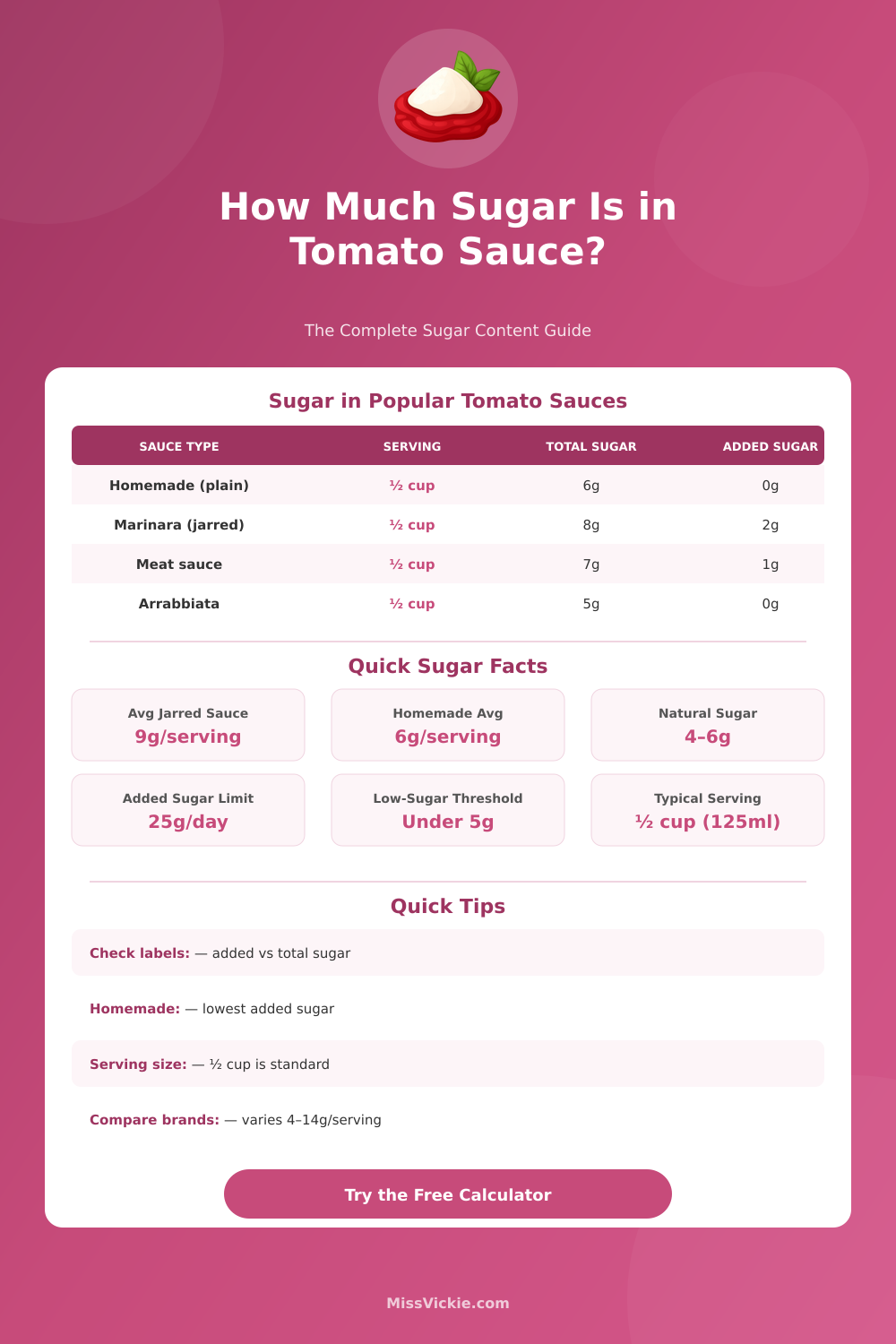
| Sauce Type | Serving | Total Sugar | Added Sugar | Natural Sugar | Sugar Level |
|---|---|---|---|---|---|
| Homemade (plain tomatoes) | ½ cup / 125ml | 6g | 0g | 6g | Low |
| Pomodoro (Fresh) | ½ cup / 125ml | 5g | 0g | 5g | Low |
| Arrabbiata | ½ cup / 125ml | 5g | 0g | 5g | Low |
| Marinara (jarred, avg) | ½ cup / 125ml | 8g | 2g | 6g | Medium |
| Meat Sauce (jarred) | ½ cup / 125ml | 7g | 1g | 6g | Medium |
| Pizza Sauce | 2 tbsp / 30ml | 3g | 1g | 2g | Low |
| Low-Sugar Brand | ½ cup / 125ml | 4g | 0g | 4g | Low |
| Sweet Style Brand | ½ cup / 125ml | 14g | 8g | 6g | High |
| Tomato Paste | 2 tbsp / 30ml | 5g | 0g | 5g | Medium |
| Vodka / Cream Sauce | ½ cup / 125ml | 6g | 1g | 5g | Low |
| Serving (Imperial) | Serving (Metric) | Marinara Total Sugar | Homemade Total Sugar | Sweet Brand Total Sugar |
|---|---|---|---|---|
| 1 tbsp | 15 ml | 1g | 0.75g | 1.75g |
| 2 tbsp | 30 ml | 2g | 1.5g | 3.5g |
| ¼ cup | 60 ml | 4g | 3g | 7g |
| ½ cup | 125 ml | 8g | 6g | 14g |
| ¾ cup | 185 ml | 12g | 9g | 21g |
| 1 cup | 250 ml | 16g | 12g | 28g |
| 1.5 cups | 375 ml | 24g | 18g | 42g |
| 2 cups | 500 ml | 32g | 24g | 56g |
| Brand / Style | Total Sugar | Added Sugar | Calories | Rating |
|---|---|---|---|---|
| Rao's Homemade Marinara | 4g | 0g | 80 kcal | Best |
| Newman's Own Marinara | 8g | 2g | 70 kcal | Good |
| Prego Traditional | 10g | 4g | 90 kcal | Moderate |
| Classico Tomato Basil | 8g | 2g | 60 kcal | Good |
| Bertolli Marinara | 7g | 2g | 80 kcal | Good |
| Ragu Old World Traditional | 9g | 4g | 80 kcal | Moderate |
| Victoria White Linen Marinara | 5g | 0g | 80 kcal | Best |
| Hunt's Traditional (canned) | 9g | 5g | 50 kcal | Moderate |
| Muir Glen Organic Marinara | 6g | 0g | 60 kcal | Best |
| Prego Heart Smart | 8g | 6g | 70 kcal | Moderate |
Tomato sauce ranks among the most easy foods to prepare. In its simplest form, it builds on canned tomatoes, some spices, good olive oil and sometimes a bit of basil. Over time those basic parts turn into something really wonderful.
This kind of sauce, around that families can build their habits.
How to Make Easy Tomato Sauce
Canned tomatoes San Marzano are seen as the golden standard for sauces. They offer rich flavor with a touch of softness, what leads to best results. When fresh tomatoes lack because of no season, whole canned tomatoes, unsplit, work perfectly.
There is a famous method, that applies only canned tomatoes, butter and half an onion. The onion cooks inside of the sauce, later one dumps it before mixing. A blender simplifies that stage.
That sauce stands out by its richness and flavor, so that it does not need even parmesan cheese when one mixes it with pasta.
Almost any tomato, that has good taste, works for creating sauce. One commonly suggests roma and other plum tomatoes, because those have more pulp, fewer liquid and seeds. Even so they are more small, so prep work mounts, and their smell does not always match to that of otehr species.
Garlic, onion, herbs and even anchovies create solid base for Italian foods in fancier sauce. Adding butter, olive oil or pork fat into tomato sauce helps it shine. A touch of sugar indeed balances the bitterness of the tomatoes, pushing the taste more bright.
In the end, the result must not seem two sweet. Add tomato paste during the first cook to deepen the set. Sauces with spice, as soy sauce, Worcestershire sauce and fish sauce, also help.
A spurt of lemon, wine or vinegar ties the tomatoes with salt.
Fresh tomato sauce is good for using the extra tomatoes from the summer garden. It lasts well in a freezer. Buying seasonal, locally grown tomatoes during peak harvest and storing them right away can push homemade sauce cost-effective and usually more tasty.
Making sauce from canned tomatoes is much more cheap and quick than those sugar-filled, flavorless and heavily preserved pasta sauces from a store. Store sauces commonly carry fake flavors or low quality tomatoes, that give bitter or bland taste. Some homemade versions can avoid such problems.
Marinara sauce differs from tomato sauce. During making of marinara, one aims to keep the nature of the tomatoes, instead of cooking them long until full change. Long cooked sauce is a whole other case.
Some sauces benefit from around six hours of cooking before ending. Leaving the sauce cook uncovered until the wanted thickness works well. Any can thicken by means of flour.
Adding red pepper flakes brings heat, that balances the bitterness. Fresh leaves of tomatoes, if available in summer, add a rustic touch, that basil alone does not reach. Bay leaves, oregano, basil and even a dose ofcilantro all go well with tomatoes and improve any pasta dish.