☕ Chocolate Espresso Bean Caffeine Calculator
Find out exactly how much caffeine is in your chocolate covered espresso beans
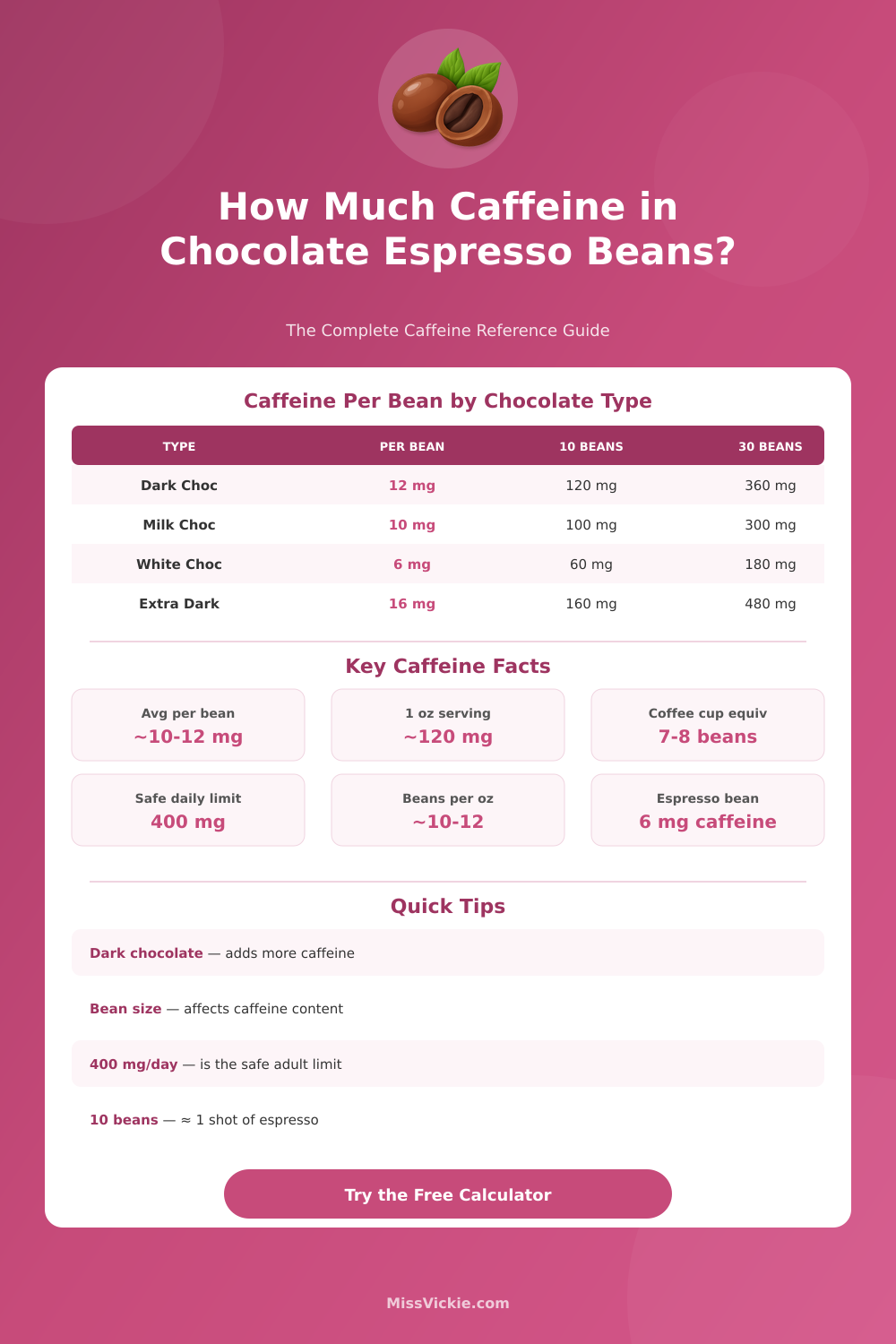
| Chocolate Type | Caffeine / Bean | 10 Beans | 20 Beans | 1 oz (~10-12 beans) |
|---|---|---|---|---|
| Extra Dark (70-85%) | 14–18 mg | ~160 mg | ~320 mg | ~170 mg |
| Dark (60-70%) | 10–14 mg | ~120 mg | ~240 mg | ~130 mg |
| Semi-Sweet / Bittersweet | 9–12 mg | ~105 mg | ~210 mg | ~115 mg |
| Milk Chocolate | 7–11 mg | ~95 mg | ~190 mg | ~100 mg |
| White Chocolate | 5–8 mg | ~65 mg | ~130 mg | ~70 mg |
| Beverage / Food | Serving Size | Caffeine (mg) | Equiv. Dark Beans |
|---|---|---|---|
| Espresso (single shot) | 1 oz (30ml) | ~63 mg | ~5–6 beans |
| Drip Coffee (8 oz) | 8 fl oz | ~95–165 mg | ~8–14 beans |
| Cold Brew (8 oz) | 8 fl oz | ~150–200 mg | ~13–17 beans |
| Energy Drink (8 oz) | 8 fl oz | ~80 mg | ~7 beans |
| Black Tea (8 oz) | 8 fl oz | ~47 mg | ~4 beans |
| Dark Chocolate Bar (1 oz) | 1 oz | ~12–25 mg | ~1–2 beans |
| Green Tea (8 oz) | 8 fl oz | ~28 mg | ~2–3 beans |
| Serving | Approx. Bean Count | Weight (oz) | Weight (g) |
|---|---|---|---|
| Single bean | 1 bean | 0.1 oz | ~3 g |
| Small handful | 10–12 beans | 1 oz | ~28 g |
| Standard snack bag | 25–35 beans | 2.5 oz | ~70 g |
| Party mix cup | 40–50 beans | 4 oz | ~113 g |
| Full bag (retail) | 75–100 beans | 7–9 oz | ~200–255 g |
Espresso beans don’t really form a separate kind of coffee. Espresso simply is a way to prepare coffee, not a particular kind of bean. One can use any coffee bean from any region or species to make espresso.
Beans marked as espresso-beans one also can brew by means of filter, French press or any other way. The key is to choose beans whose flavor matches well.
What Are Espresso Beans and How to Make Espresso
That said what gets the label “espresso-beans” in the store, usually are dark roasted. It commonly is made up of a mix of robust and arabica beans. Against average coffee beans, those for espresso one usually roasts more continuously, grinds more finely and brews under pressure.
That results in a very dense and tasty shot, that one can drink alone or as a base for milky drinks.
Arabica beans are the most liked for both espresso and usual coffee. They have around half of the Caffeine compared to robust beans. The amount of Caffeine ranges after one roasted and grinded the beans.
Dark roasts more easily help to create crema, that light-colored foam that sits on top of an espresso-shot.
For a single shot of espresso one uses around seven to eight grams of coffee, what matches about 55 beans. A double shot requires around 14 grams, so around 110 beans. One must expect a bit of difference according to the size of beans and the depth of roast.
Espresso came from Italy and grew to one of the most favorite ways to brew coffee around the world. Standard serving is about 25 too 30 milliliters.
Beans roasted between seven and 21 days before tend to work best. Too fresh coffee holds more gas, what creates more resistance during pulling espresso. It is good to buy beans with a date of roast printed on the package.
Medium and dark roasts are liked options especially for espresso.
According to taste, we find big variety. African arabica or bright espresso-roast commonly have fruity and flowery character. Beans from Brazil usually add nutty and sweet hints.
Those from Guatemala can give rich body with chocolate tones. Some mixes aim for brown sugar and rich sweetness instead of vivid fruitiness.
Grind beans freshly just before brewing creates a big change. Buy fresh beans and grind them right before drawing shots leads to much better espresso. It is normal to try out different sizes of grind, tamping and heat to reach the right result.
Methods like the Weiss Distribution Technique or spraying water on beans before milling also help to improve the flavor.
For Chocolate Covered Espresso Bean as a snack, around eight to twelve bits match the Caffeine in one cup of brewed coffee. A good amount for a meal is about seven to ten beans, to get aCaffeine boost without overdoing it.