🧂 Sodium in Soy Sauce Calculator
Calculate exact sodium content by type, serving size & number of servings
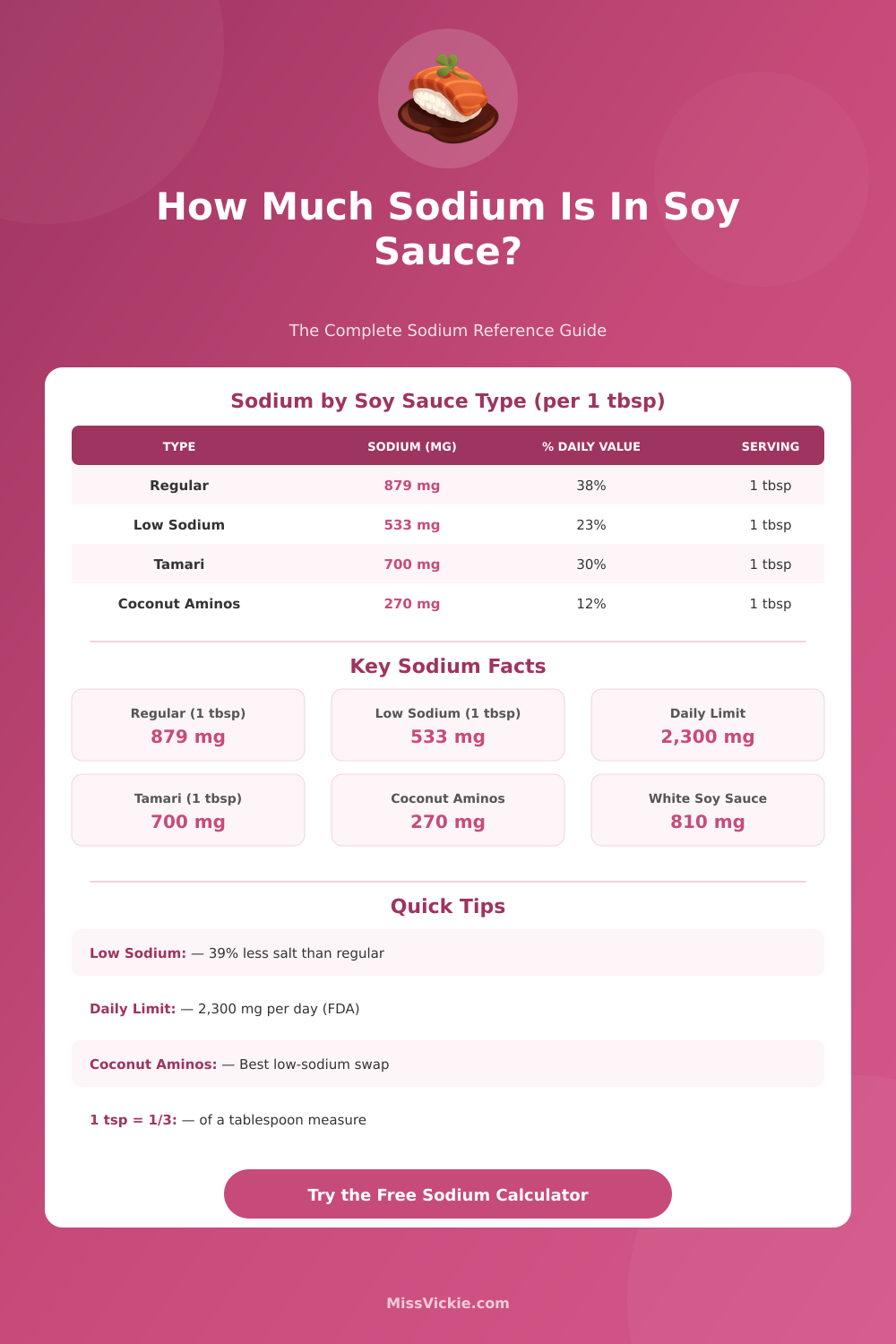
| Soy Sauce Type | Sodium (mg) | % Daily Value | Calories | Serving |
|---|---|---|---|---|
| Regular (Kikkoman) | 879 mg | 38% | 11 kcal | 1 tbsp (15ml) |
| Low Sodium | 533 mg | 23% | 10 kcal | 1 tbsp (15ml) |
| Tamari (GF) | 700 mg | 30% | 11 kcal | 1 tbsp (15ml) |
| Dark Soy Sauce | 1,000 mg | 43% | 20 kcal | 1 tbsp (15ml) |
| White / Shiro | 810 mg | 35% | 14 kcal | 1 tbsp (15ml) |
| Coconut Aminos | 270 mg | 12% | 15 kcal | 1 tbsp (15ml) |
| Sweet (Kecap Manis) | 650 mg | 28% | 50 kcal | 1 tbsp (15ml) |
| Chinese Dark Soy | 930 mg | 40% | 18 kcal | 1 tbsp (15ml) |
| Measurement | ml | Regular Sodium | Low-Na Sodium |
|---|---|---|---|
| 1 teaspoon (tsp) | 5 ml | 293 mg | 178 mg |
| 1 tablespoon (tbsp) | 15 ml | 879 mg | 533 mg |
| 1 fluid ounce | 30 ml | 1,758 mg | 1,066 mg |
| ¼ cup | 60 ml | 3,516 mg | 2,132 mg |
| ½ cup | 120 ml | 7,032 mg | 4,264 mg |
| 1 cup | 240 ml | 14,064 mg | 8,528 mg |
soy sauce is a liquid seasoning that originally comes from China. Traditionally one prepares it from a fermented mix of soybeans, roasted grain, salt water and special molds. It is famous because of its saltiness and strong umami flavor.
That umami enriches foods by means of deep richness and gives them a brown shade that makes them visually more attractive, for instance fried rice marinated chickens or stir-fried noodles.
What Soy Sauce Is and How It Is Made
Two main kinds of Chinese soy sauce exist. Light soy sauce has a bright brown and thin makeup. It ferments more briefly, so it has a gentle taste and is very salty.
It works well for dipping or dressing foods. Dark soy sauce is thicker and more black-brown due to long fermentation. It gives strong color and commonly one uses it to improve the look of dishse, although alone it has a slightly weak taste.
Japanese soy sauce splits into five main types: Shiro, which is white soy sauce; Usukuchi, light soy sauce; Koikuchi, dark soy sauce; Saishikomi, which ferments twice; and Tamari. They range from pale golden and liquid to deep black-brown and thick. Tamari is a kind of soy sauce without wheat.
Preparing traditional soy sauce requires years.
Kikkoman soy sauce ferments from only fore basic ingredients: water, soybeans, wheat and salt. The fermenting process stays unchanged over centuries. Handmade naturally fermented soy sauces age months or even years in barrels and can cost up to 150 dollars per bottle.
Modern production methods speed everything up a lot. A method called acid hydrolysis allows one to produce soy sauce in only some days instead of many months. One heats the beans and mixes them with hydrochloric acid.
Soy sauces that are not fermented naturally commonly contain additives like sweetener, artificial colors, flavors and preservatives. Naturally fermented versions stay the best choice.
soy sauce works well as a wet rub for marinating chickens or meat. Poking holes in the meat before the marinade helps to avoid it drying out too much. One uses it also in stir fries, glazes and salty sauces.
Indonesian kecap manis is based on palm sugar mainly, which gives it a caramel, smoky taste and syrupy makeup.
One spoon of usual soy sauce carries around 10 calories, no fat and 920 milligrams of sodium. Soy sauce is rich in salt. Versions with low sodium are available and they work for recipes, but sometimes one needs a bit more of it.
Soy sauce lasts years because of this salt. Pearl River Bridge, Kimlan and Kikkoman are popular brands thatdeserve a try.