🍵 Caffeine in Tea Calculator
Find out exactly how much caffeine is in your cup of tea — by type, steep time & serving size
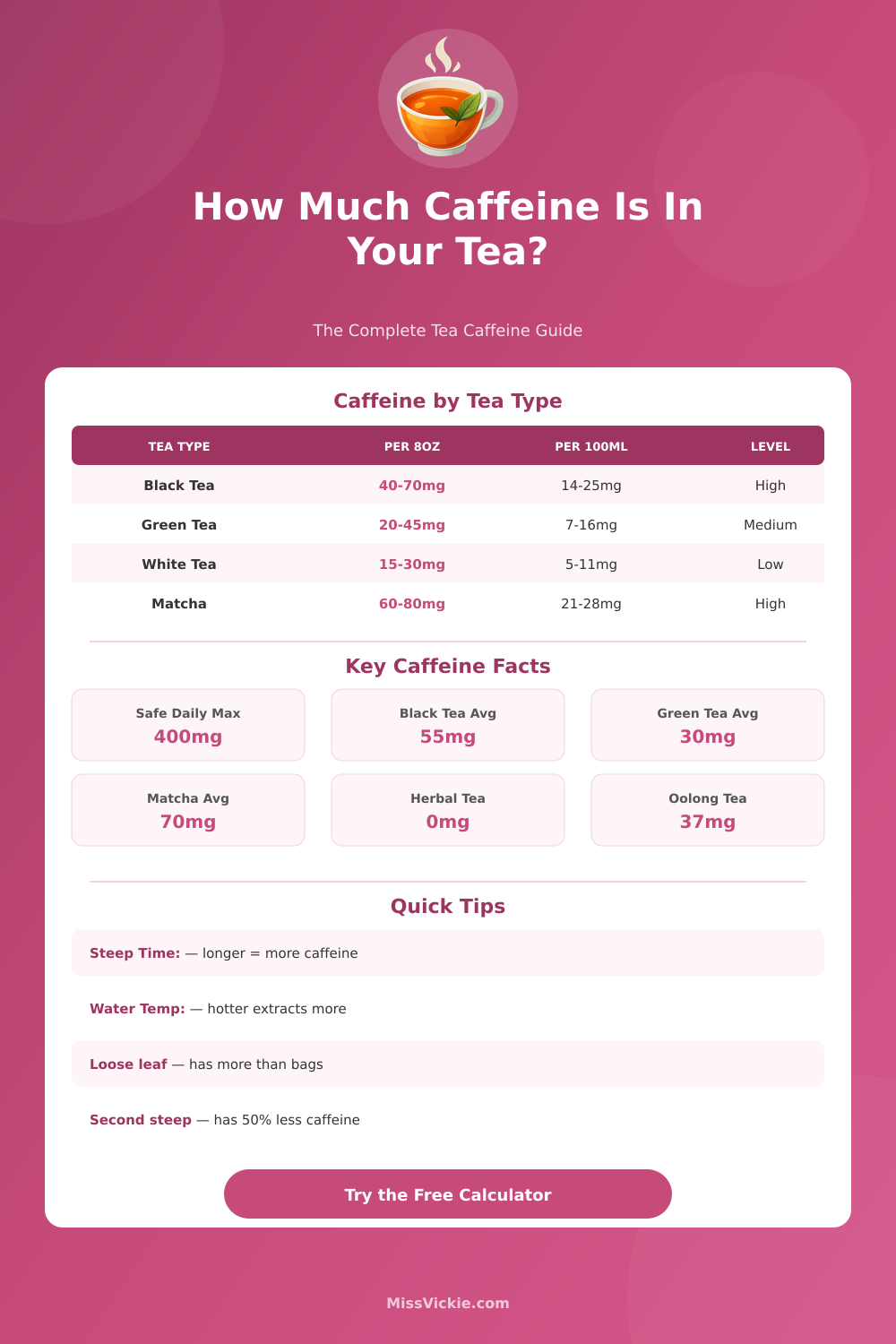
| Tea Type | Per 8 fl oz (avg) | Per 100ml | Range (mg) | Level |
|---|---|---|---|---|
| Black Tea | 47 mg | 20 mg | 40–70 mg | High |
| Green Tea | 29 mg | 12 mg | 20–45 mg | Medium |
| White Tea | 20 mg | 8 mg | 15–30 mg | Low |
| Oolong Tea | 37 mg | 16 mg | 30–50 mg | Medium |
| Matcha | 70 mg | 30 mg | 60–80 mg | High |
| Masala Chai | 50 mg | 21 mg | 40–65 mg | High |
| Pu-erh Tea | 60 mg | 25 mg | 30–70 mg | High |
| Yellow Tea | 33 mg | 14 mg | 25–45 mg | Medium |
| Herbal Tisane | 0 mg | 0 mg | 0 mg | None |
| Rooibos | 0 mg | 0 mg | 0 mg | None |
| Steep Time | Extraction % | Effect on Caffeine | Recommended For |
|---|---|---|---|
| 1 minute | ~55% | Much lower caffeine | Delicate green/white tea |
| 2 minutes | ~70% | Moderately lower | Green, white, yellow |
| 3 minutes | ~85% | Standard extraction | Most tea types |
| 5 minutes | ~100% | Full extraction | Black, oolong, pu-erh |
| 7+ minutes | ~105% | Slightly over-extracted | Strong brew |
| Group | Safe Daily Limit | Equivalent Black Tea | Equivalent Green Tea |
|---|---|---|---|
| Healthy Adults | 400 mg/day | ~8 cups | ~13 cups |
| Pregnant Women | 200 mg/day | ~4 cups | ~6–7 cups |
| Adolescents (12–18) | 100 mg/day | ~2 cups | ~3 cups |
| Children (<12) | Not recommended | — | — |
| Tea Form | Caffeine Yield | Notes |
|---|---|---|
| Standard Tea Bag | Baseline (100%) | Most common form, slightly lower caffeine due to smaller leaf pieces |
| Loose Leaf Tea | +10–20% | Larger leaves, better extraction surface area |
| Matcha Powder | +30–50% | Whole leaf consumed, highest caffeine density |
| Cold Brew Tea | −20–30% | Lower temperature extracts less caffeine |
| Instant Tea | −10–15% | Processing reduces caffeine content slightly |
tea is a nice smelling drink that one makes by pouring warm or hot water on dried or fresh leaves of the plant Camellia sinensis. This is an evergreen bush that naturally grows in East Asia. It first appeared in the border regions of southwest China, northeast of India and north of Myanmar.
In the whole world tea ranks second after water as the most favorite drink. In China the earliest reference about tea describes it as a medical drink during the 3rd century.
What Tea Is and How to Use It
All real tea comes from the same species. The way one handles and prepares the leaves decides the kind of tea that one receives. White teas come from buds of tea plants and include types as Silver Needle or White Peony.
Among them white tea stays the most lightly processed form, so it has tender character and easily shows its flowery notes. Other common kinds are green tea, black tea, oolong and herbal teas.
About the making of tea there are some common tips. Use one teaspoon of leaves for every six ounces of water, because one cup holds eight ounces, so a bit more than one spoon is enough for a cup. For one serving of loose leaf tea one usually estimates two grams for eight ounces of warm water.
While a 12-ounce cup of black tea, almost one and half teaspoons give good result. For herbal and green teas suit one to two teaspoons, according to the wanted strenght of the taste. For more bulky and wet leaves it may be useful to use one full tablespoon for an eight-ounce cup.
The standard serving of tea matches eight ounces, and one ounce of leaves commonly is enough for 10 to 15 cups, according to the taste choice.
Green tea normally lasts one to four rounds from one amount. But for many green teas two times is the maximum, before the typical character disappears.
tea does not limit to simply drinking. One can use it in cooking and baking. Green, black, oolong and herbal teas go well with savory foods to give subtle tastes.
They go into baked products, broths or marinades. In Thailand condensed milk forms a common part of cha yen, the typical iced tea with strong black base, sugar, spices and ice. Herbal iced tea with hibiscus has wonderful red color and tastes reminding fruits, especially raspberries.
A cold pitcher with fresh berries and citrus slices floating in it works grate for a summer taste.
Stuff like cinnamon, honey, mint, peppermint, ginger, maple syrup and lemon all can enrich the taste of tea. Bengal spice tea naturally sweetens and warms with a fair amount of caffeine. A little bit of maple syrup goes well with it.
There are also caffeine-free herbal choices like chamomile, mint and hibiscus teas forthose that avoid caffeine.