🍵 Green Tea Caffeine Calculator
Instantly calculate caffeine in your green tea by type, cups, and steep time
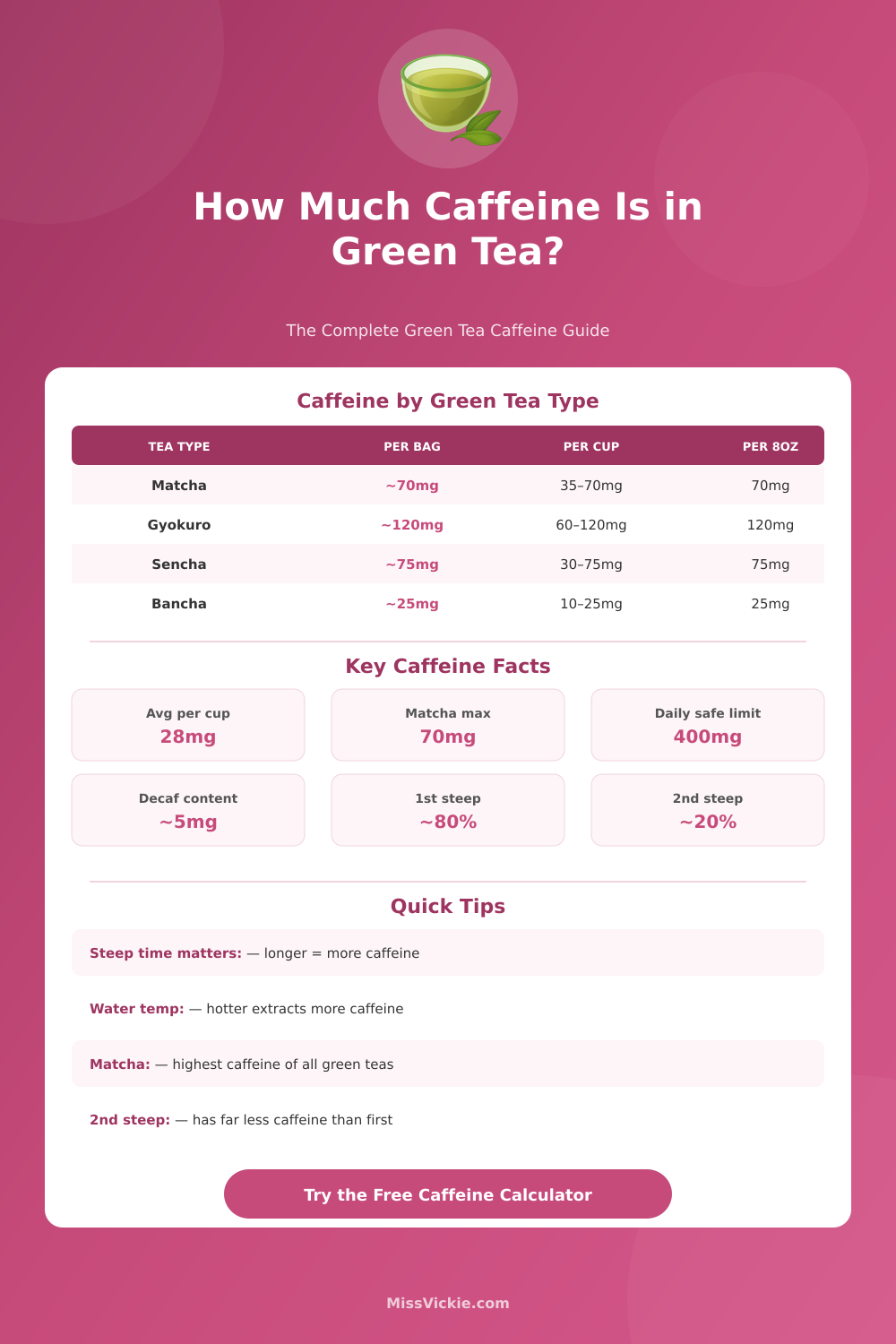
| Tea Type | Caffeine Range | Avg (mg) | Origin | Notes |
|---|---|---|---|---|
| 🍵 Sencha | 20–90 mg | 55 mg | Japan | Most common green tea |
| 🌿 Matcha (whisked) | 38–88 mg | 70 mg | Japan | Whole leaf — higher caffeine |
| 🍃 Gyokuro | 85–140 mg | 120 mg | Japan | Shade-grown, highest caffeine |
| 🍃 Bancha | 10–40 mg | 25 mg | Japan | Older leaves, very mild |
| 🍚 Genmaicha | 10–40 mg | 30 mg | Japan | Diluted with roasted rice |
| 🌳 Kukicha | 10–35 mg | 20 mg | Japan | Twig tea, very low caffeine |
| 🍃 Hojicha | 7–30 mg | 15 mg | Japan | Roasted, lowest caffeine |
| 🍵 Dragon Well | 20–75 mg | 50 mg | China | Longjing, flat pan-fired leaf |
| 💤 Decaf Green Tea | 2–10 mg | 5 mg | Various | Trace caffeine remains |
| Steep Time | Caffeine Extracted | Flavor | Recommended For |
|---|---|---|---|
| 30 seconds | ~30% of base | Very light | Caffeine-sensitive drinkers |
| 1 minute | ~50% of base | Light, fresh | Gyokuro, Sencha |
| 2 minutes | ~70% of base | Balanced | Most green teas (standard) |
| 3 minutes | ~85% of base | Full, slightly bitter | Bancha, Genmaicha |
| 5 minutes | ~95% of base | Strong, bitter | Iced tea concentrate |
| Cold brew (8+ hrs) | ~60–70% of base | Smooth, sweet | Iced green tea |
| Steep # | % Caffeine vs 1st | Approx. mg (Sencha) | Tip |
|---|---|---|---|
| 1st Steep | 100% | ~55 mg | Most caffeine extracted here |
| 2nd Steep | ~20–30% | ~12–17 mg | Good low-caffeine option |
| 3rd Steep | ~5–10% | ~3–6 mg | Almost caffeine-free |
| Serving | Metric (ml) | Imperial (fl oz) | Tea Bags / Leaves |
|---|---|---|---|
| Small cup | 150 ml | 5 fl oz | 1 bag or 2g loose leaf |
| Standard cup | 240 ml | 8 fl oz | 1 bag or 2–3g loose leaf |
| Mug | 350 ml | 12 fl oz | 1–2 bags or 4g loose leaf |
| Large travel mug | 480 ml | 16 fl oz | 2 bags or 5g loose leaf |
| Matcha serving | 120 ml | 4 fl oz | 1–2g matcha powder (1 tsp) |
green tea comes from the leaves and buds of the Camellia sinensis plant. Unlike black tea and oolong tea, its leaves do not go through heavy oxidation. It exists in China since the end of the first millennium BC which gives it a remarkable history.
Between all kinds of tea it is the least oxidized.
What Is Green Tea and How to Use It
Good leaves for green tea are heated or steamed soon after the harvest. This way one keeps their natural fresh color and receives a nutritious base full of antioxidants. China and Japan produce the most brilliant green teas, but now many other countries also grow them.
In China and Japan green tea long was of great value, and it recently caught the attention in United States.
green tea is rich in polyphenol antioxidants, that help to fight oxidant tension. They can help the body and the brain work more well. Studies show, that tea was used for health already during three thousand years.
Green tea and its extracts promote weight loss, lowering of cholesteral levels in blood and prevention of chronic diseases, for instance heart or cancer. Two until three cups daily is considered safe and healthy habit. For maximum benefit, one could drink three until five cups daily.
Both green and black teas naturally contain caffeine. On the other hand, green tea has also L-theanine, that calms the effects of caffeine for reaching calm focus. So it works more four folks with anxiety than coffee.
Black tea however has useful substances, although not that much as green tea.
One cup of brewed green tea has around two calories. That is almost nothing.
To brew green tea well, one must mind the right method. Temperature of the water and length of the brewing are the two main points for success. Green tea one should brew with cooler water than black.
Hot water or too long soaking makes it bitter and unpleasant. Practical advice is one spoon of leaves for every six cups of water. Leaves in loose form commonly taste better than bagged.
Longjing and jasmine tea make good starting points for leaves without bag.
green tea has many varieties inside. Hojicha is a roasted Japanese variety with little caffeine and sweet taste. Sencha and Longjing have middle amount of caffeine.
Matcha is a powder form from whole leaves, so it has more caffeine. Gyokuro grows under shade and stores more caffeine. Matcha and usual green tea come from the same kind of plant, but one grows andprepares them differently.
green tea works also as an ingredient in kitchen. Leaves of tea are grasses, that one can grind and mix with flavors. It goes surprisingly with red lentil foods.
One can add matcha dust in smoothies, ice cream, bread and sweets like creme brulee. Ochazuke is a Japanese meal, in that rice cooks in a cup of green tea, covered with salmon, nori or green onions.