🥬 Hot Pot Meat Per Person Calculator
Calculate exactly how much meat you need for your hot pot gathering
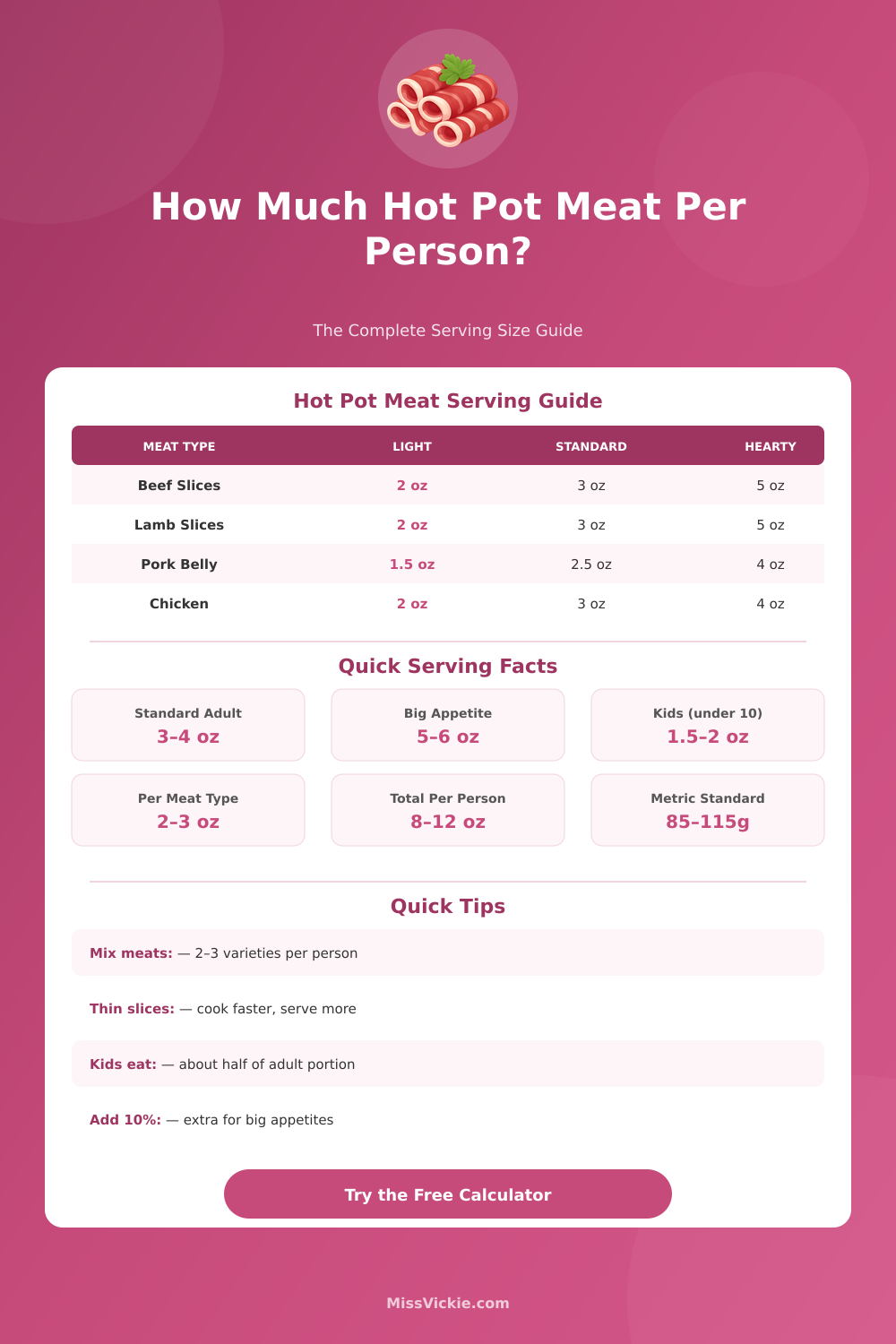
| Meat Type | Light (oz / g) | Standard (oz / g) | Hearty (oz / g) | Notes |
|---|---|---|---|---|
| 🐄 Beef Slices | 2 oz / 57g | 3–4 oz / 85–113g | 5–6 oz / 142–170g | Ribeye or sirloin most popular |
| 🐑 Lamb Slices | 2 oz / 57g | 3–4 oz / 85–113g | 5–6 oz / 142–170g | Leg or shoulder, thinly sliced |
| 🐖 Pork Belly | 1.5 oz / 43g | 2.5–3 oz / 71–85g | 4–5 oz / 113–142g | Rich — pairs well with light broth |
| 🐓 Chicken | 2 oz / 57g | 3 oz / 85g | 4–5 oz / 113–142g | Thigh meat holds up better |
| 🦐 Shrimp | 2 oz / 57g | 3 oz / 85g | 4 oz / 113g | Approx 5–6 large shrimp per serving |
| 🐟 Fish Slices | 1.5 oz / 43g | 2.5 oz / 71g | 3.5 oz / 99g | Tilapia or bass fillets sliced thin |
| Scenario | Meat Types | Total oz/person | Total g/person | Total lb / kg for 4 |
|---|---|---|---|---|
| Light (with heavy sides) | 2 types | 4–6 oz | 113–170g | 1–1.5 lb / 0.45–0.68 kg |
| Standard (main meal) | 2–3 types | 8–12 oz | 227–340g | 2–3 lb / 0.9–1.36 kg |
| Hearty (meat focus) | 3–4 types | 12–18 oz | 340–510g | 3–4.5 lb / 1.36–2 kg |
| Kids under 10 | Any | 2–3 oz | 57–85g | — (half adult) |
| Meat | Raw Amount | Yield % | Cooked Amount |
|---|---|---|---|
| Beef Slices | 4 oz / 113g | ~75% | 3 oz / 85g |
| Lamb Slices | 4 oz / 113g | ~75% | 3 oz / 85g |
| Pork Belly | 3 oz / 85g | ~70% | 2.1 oz / 60g |
| Chicken | 3 oz / 85g | ~78% | 2.3 oz / 66g |
| Shrimp | 3 oz / 85g | ~80% | 2.4 oz / 68g |
| Fish Slices | 2.5 oz / 71g | ~82% | 2.1 oz / 58g |
Warm jar uses meat in slim slices, that cooks quickly in hot broth at the table. Common meats like beef, pork, lamb and chicken work well for this dish. Cooks cut them very thin almost like paper.
You drop those wet bits right in the soup, and they cook in only some seconds. For warm jar, choose beef, that is fatty, tender, quickly cooked and able to absorb the taste of the broth.
Choose and Cook Thin Meat for Hot Pot
Fat slices of hot pot meat are the best choice. Brisket is a good option, also like rib eye. Slices from rib eye give deep, rich flavor and commonly appear in Asian foods like sukiyaki or shabu-shabu.
Pork belly does not cook well in warm jar. Search for fatty brisket, if you buy at an Asian food store. The benefit of fatter bits is, that fast dips in the broth leave a bit of fat, while thin slices cook differently.
Cut the hot pot meat at home needs a bit of skill. Meat, that is partly cooled, is easier to cut in slim bits, because it keeps its form. When the meat freezes fully on Friday, move it right to the fridge, so that it thaws correctly for Saturday.
A knife from a deli on partly frozen meat works well too. While you freeze at home, arrange the hot pot meat in one layer on plates or between wax paper, so that the bits easily divide. Slices between one and five millimeters work best, because they do not tare or melt too quickly in the warm soup.
Cooking the slices is easy work. Drop slim bits in the hot broth and pull them out, when the color changes and the texture firms up. Overcooking makes the meat tough, so keep it fast.
Bits from beef, pork and lamb cook around five to thirty seconds, depending on the heat and thickness. The brothmust boil hot with plenty of steam before you lay the meat in it.
Except pre-cut hot pot meat, you have other choices. Beef or seafood can prepare in various kinds of balls. Marinated meat is another method, that means to season and soak it in a mix of soy sauce, sugar and cornstarch.
Marinated meat usually does not serve frozen. For serving, around half a pound to one pound each person works well.
Seafood adds fresh, tender taste, that goes well with the other ingredients. Slices from fish cook in one to two minutes, until they become clear and firm. Frozen shrimp work just as well as fresh, and you can cook them quickly without thawing before.
The main idea of warm jar is, that simple slices of hot pot meat, vegetables, tofu, seafood and noodles sit on the table, and each person cooks what they want, at the spot. Raw food mixing is a real risk, so make sure, that foods stay in the broth long enough for full cooking, for safety.