🍞 Sourdough Starter Calculator
Calculate exact feeding ratios, hydration levels & flour/water amounts for your starter
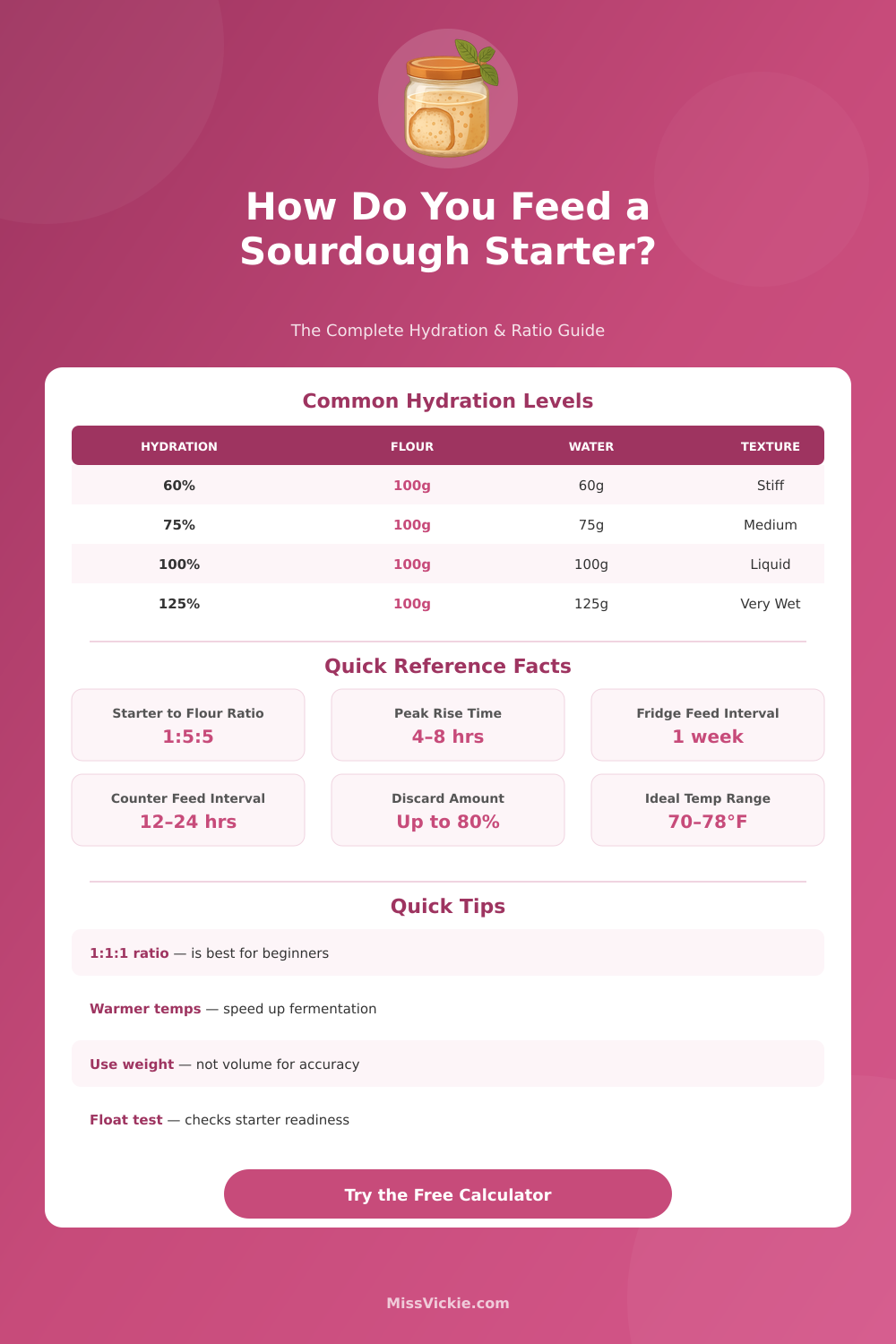
| Hydration % | Flour (g) | Water (g) | Texture | Best For |
|---|---|---|---|---|
| 50–60% | 100g | 50–60g | Very Stiff | Panettone, Bagels |
| 65–70% | 100g | 65–70g | Firm Dough | Pizza, Focaccia |
| 75–80% | 100g | 75–80g | Medium | Country Loaf |
| 100% | 100g | 100g | Pourable | Waffles, Pancakes |
| 125% | 100g | 125g | Very Wet | Crackers, Flatbreads |
| Ratio (S:F:W) | Rise Time (70°F) | Use Case | Activity Level |
|---|---|---|---|
| 1:1:1 | 4–6 hrs | Active daily maintenance | Very Active |
| 1:2:2 | 6–8 hrs | Twice-weekly feeding | Active |
| 1:3:3 | 8–10 hrs | Weekend baking | Moderate |
| 1:5:5 | 10–14 hrs | Overnight rise at room temp | Slow |
| 1:10:10 | 12–18 hrs | Overnight cold rise | Very Slow |
| 1:20:20 | 18–24 hrs | Long cold fermentation | Minimal |
| Discard % | Starter Kept (from 100g) | Starter Kept (from 50g) | Frequency |
|---|---|---|---|
| 50% | 50g kept | 25g kept | Daily / Twice Daily |
| 70% | 30g kept | 15g kept | Daily Maintenance |
| 80% | 20g kept | 10g kept | Standard Maintenance |
| 90% | 10g kept | 5g kept | Minimal Waste |
| 0% (no discard) | 100g kept | 50g kept | Growing Starter |
Maintaining a sourdough starter require a balance of art and science. The ratios of flour, water, and starter is key component of a healthy sourdough culture. Incorrect ratios will result in a sourdough starter that is too acid, weak, or inconsistently active. Maintaining these ratios can be challenging, which is why sourdough starter calculator exist to simplify this process for home bakers.
Follow the standard 1:1:1 ratio for starter, flour, and water by weight for a 100% hydration starter that will be active in 4-6 hours at room temperature. Use the 1:5:5 ratio for a starter that will take 10-14 hours to rise to overnight ratio without refrigeration. Use 60% hydration for lean sourdough starter recipe like bagels. Use 125% hydration for recipes with wet batter like pancakes.
Mastering Sourdough Starter Ratios and Hydration
Dividing the weight of water by the weight of flour and multiplying the result by 100 calculates the percentage of hydration. For a 100% hydration sourdough starter, the weight of water are equal to the weight of flour. This makes the starter easy to pour out of the container. The baker can adjust the hydration ratio to meet baking needs. Use a digital kitchen scale to weigh ingredient. Using volume measurements can cause up to a 20% variance in the recipe.
Always discard sourdough starter before feeding it. This help to keep the acidity of the starter within healthy limit. The most common recipe for discarding sourdough starter is to discard 80% of the starter (saving 20g from 100g) and feeding the remaining portion with fresh flour and water. When baking day arrive, scale up the starter to 200g to use 20% of the starter in sourdough dough.
Experiment with different feeding ratio to find the best suited to your baking schedule. Use presets for double feed at twice-weekly intervals or use a stiff sourdough starter for pasta recipe. Feed your starter at the same temperature in your kitchen. The ideal temperature are 70°F. Lower temperature will slow the cultures activity. Use the sourdough starter calculator above to determine different feeding ratios and times to suit your kitchen and baking schedule.
Maintaining sourdough starter requires a consistent feeding schedule. Use quality whole grain flour when starting your sourdough starter. The starter will be ready to use when it begins to foam and double in size. With some experience with feeding and caring for your sourdough starter, it can bake endless loaf of sourdough bread for you and your family.