🧀 Meat & Cheese Per Person Calculator
Calculate exactly how much meat & cheese to serve for any occasion
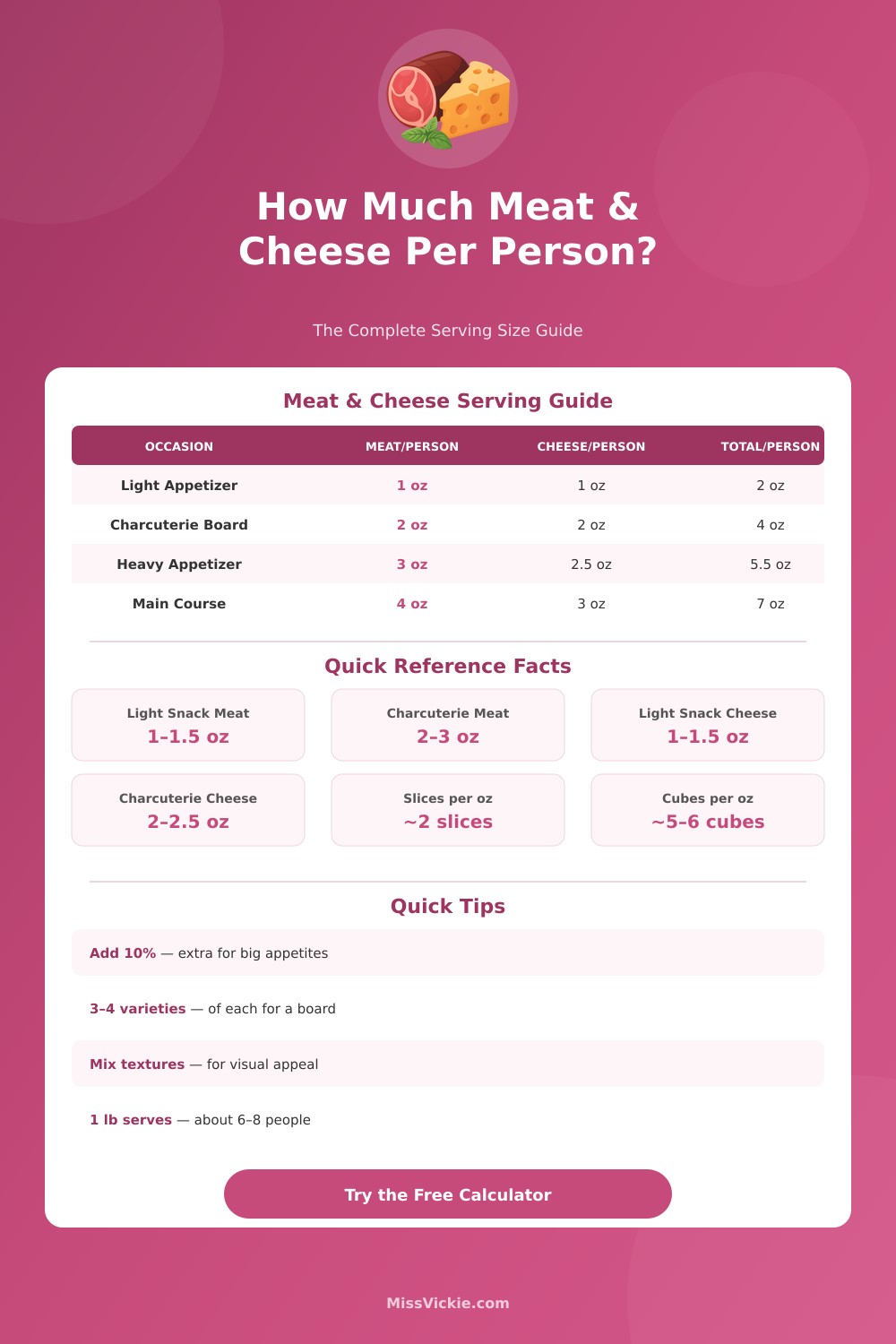
| Occasion | Meat / Person | Cheese / Person | Total / Person | For 10 People |
|---|---|---|---|---|
| Light Snack | 1 oz (28g) | 1 oz (28g) | 2 oz (57g) | 1.25 lbs (0.57kg) |
| Charcuterie Board | 2 oz (57g) | 2 oz (57g) | 4 oz (113g) | 2.5 lbs (1.13kg) |
| Heavy Appetizer | 3 oz (85g) | 2.5 oz (71g) | 5.5 oz (156g) | 3.4 lbs (1.55kg) |
| Main Course Spread | 4 oz (113g) | 3 oz (85g) | 7 oz (198g) | 4.4 lbs (2.0kg) |
| Meat Type | Slices/oz | Oz/Person |
|---|---|---|
| Prosciutto | 2–3 slices | 1.5–2 oz |
| Salami | 4–5 slices | 2–3 oz |
| Coppa | 3–4 slices | 1.5–2 oz |
| Bresaola | 3–4 slices | 1.5–2 oz |
| Chorizo | 4–6 slices | 2–3 oz |
| Mortadella | 2–3 slices | 2–3 oz |
| Pepperoni | 6–8 slices | 1.5–2 oz |
| Cheese Type | Form | Oz/Person |
|---|---|---|
| Cheddar | Cubes/slices | 2–3 oz |
| Brie | Wedge | 1.5–2 oz |
| Gouda | Cubes/slices | 2–3 oz |
| Blue Cheese | Crumbled | 0.5–1 oz |
| Manchego | Wedge | 1.5–2 oz |
| Gruyère | Cubes | 1.5–2 oz |
| Camembert | Whole/wedge | 1.5–2 oz |
| Guests | Meat Varieties | Cheese Varieties | Total Meat (Board) | Total Cheese (Board) |
|---|---|---|---|---|
| 4–6 | 2–3 | 2–3 | 0.5–0.75 lb | 0.5–0.75 lb |
| 8–12 | 3–4 | 3–4 | 1–1.5 lbs | 1–1.5 lbs |
| 15–20 | 4–5 | 4–5 | 2–2.5 lbs | 2–2.5 lbs |
| 25–30 | 5–6 | 5–6 | 3–4 lbs | 3–4 lbs |
| 40–50 | 6–8 | 6–8 | 5–6.5 lbs | 5–6.5 lbs |
meat and cheese boards well feed whole group. Each homemade meat board is special and prepared by means of a pick from fancy cheeses and cured meats, olives, nuts, dried and fresh fruits crackers and extra toppings. Arranged cheese and meat boards work for many occasions of fun.
Use around two to three ounces of meat and cheese for every guest. For a party with ten guests, plan about twenty to thirty ounces total. Because these are snacks, two ounces meat and one and half ounces cheese for folks forms good start.
How to Make a Meat and Cheese Board
The right pairing of meat and cheese really changes everything. Contrast pairing means to combine opposites, for instance sharp meats with creamy cheeses. Matching pairing wants likenesses in the flavors, as gentle cheese with tender meats.
Cheeses with gentle taste go with gentle meats, while strong cheeses go with strong meats. Beef goes well with cheddar or stilton. Ham goes well with salami, munster or butter cheese.
Chicken goes nicley with Swiss cheese. Among classic pairings is ham with Swiss, beef with cheddar or pepper jack, salami with provolone and meatballs with American cheese.
For two folks three cheeses probably suffice, especially if meat also sits on the plate. Fruits really help to balance the cheese board. Grapes, fresh figs or blocks or preserves all work well.
Nuts form also good addition. Unsalted nuts help to clear the flavors between bites. Add something that cleans the mouth, letting eaters taste the foods again freshly.
Bread can sit in a basket nearby.
Feta cheese has a bit stronger taste then the majority of other cheeses and a bit buttery feel. It can become peppery when it ages. Feta goes well with tomatoes, because their sweet or bitter tastes complete the cheese well.
For meats, lamb best pairs with feta.
meat and cheese boards should really highlight the meats and cheeses themselves. When one serves cheese as main dessert for a feast, one to one and three-quarters ounces per person works. That helps guests end with wine in the afternoon and makes sure that none stays hungry.
For bigger events with full crowds, plan around five ounces meat and three and half ounces cut cheeses for folks. Serving sizes of meat usually measure to the size of a pack of cards or thepalm. Leftovers and bits from local cheese shop can create wonderful and cheap meat board also.