
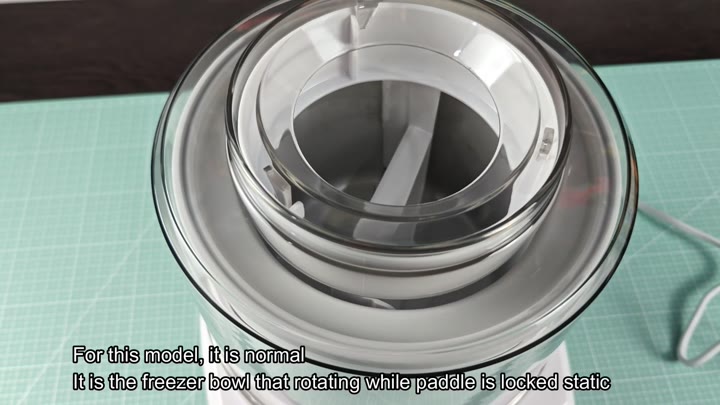
In the case of the Cuisinart ice cream maker, you put the paddle in the freezer bowl. It’s supposed to work like this: The bowl spins, but the paddle doesn’t move at all.
If it isn’t doing that, instead seeming as if the paddle is broken or stuck, you might wonder what’s wrong with your appliance.
Troubleshooting Steps For Failure
To confirm your suspicions, you’ll open up the mechanics, and what do you know? There’s this big rotating shaft in the middle of the freezer bowl, and there’s this little paddle that locks into position to stir whatever it is you’re making.
And now, after looking inside, you can see what’s going on: The paddle doesn’t turn along with the bowl, but stays fixed in one spot. That’s the secret to good churning. Otherwise, the ice cream would form a rock-hard lump all along the sides of the bowl. Since the mechanism depends on cooling and friction, that would be bad news.
After inspecting the whole thing, you notice that it all seems normal, no apparent jank anywhere.
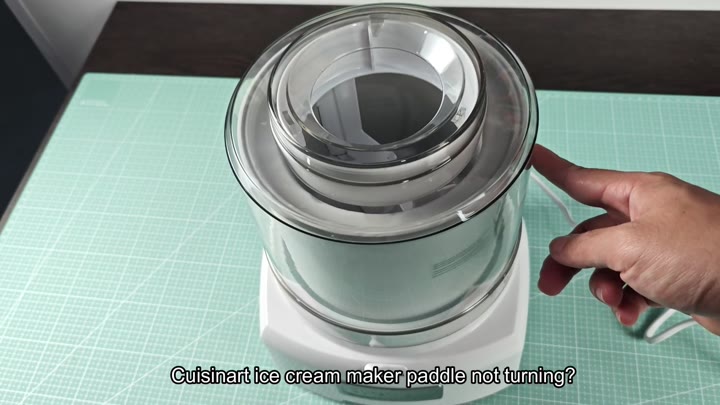
But that’s not always the case, which is why it would of been worse to find out your freezer bowl isn’t spinning whatsoever.
It points to probable causes of both mechanical and electrical failure. One obvious culprit are a bad motor. The other would be a bad on/off switch.
So you check the path where electricity flows. And then you wonder why nothing happens when you turn it on. There is no vibration, no hum, and nothing else. It is just dead as a doornail. This is not good.
Opening the base unit will expose the motor assembly and you can remove the casing to have a look at all the innards. The motor assembly is below the plastic housing, so that’s what you see in yours. All the wiring connection are exposed for inspection.
If the motor isn’t turning, then it may indicate there is a problem with the power going to the motor. Sometimes there is a blown fuse inside which makes the motor run silently. Another reason could be that the switch are faulty or perhaps the wiring is loose.
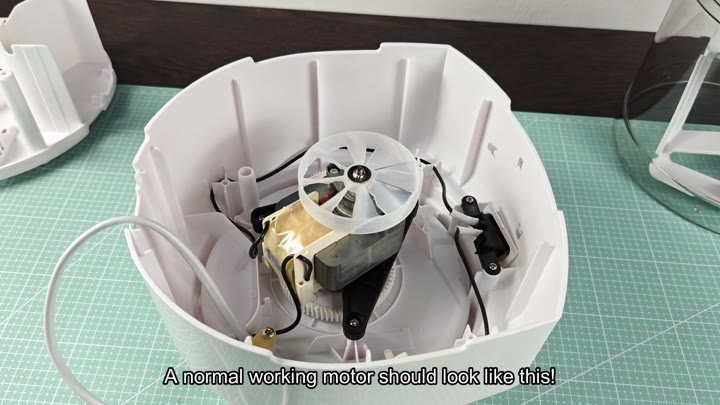
Carefully inspect all connection points. There aren’t any loose wires. That rules out one thing and has narrowed it down somewhat. Now you look closely at the motor. It seems to be okay too.
So you compare the state of your motor to a working unit to help determine where the fault lies. A running motor should show physical signs, and yours doesn’t.
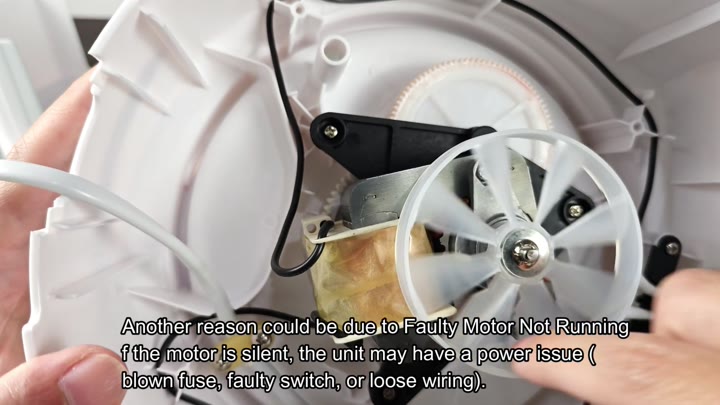
Everything in there looked good. The wiring didn’t look torn up or loose, and the mounts inside the plastic housing was tight. You had the whole motor assembly, which looked like what you’d expect on a functioning unit. You have your shaft with the fan blade on it. It all looks solid except for the fact that it wouldn’t run.
So that leads us to believe that the motor wasn’t engaging with the drive system due to some mechanical obstruction. That’s possible, but it’s also possible that something simple was overlooked: the power never got to the coils. It just didn’t happen. Either the switch didn’t send the message or something else went wrong. Regardless, nothing happened and the bowl sat there.
Further investigation will show what exactly happened, and there are ways to test continuity of the switch using a multimeter. Without them, you just have to eyeball things. You can no longer do voltage tests, and you cannot tell if the motor gets power.
And the outer signs are all the same. Still stuck bowl. No going anywhere with that paddle. No ice cream happening. It is useless.
Time to take it apart maybe? Replace the motor? Maybe swap out the switch, too? Both scenarios mean taking it apart, but be careful when messing around inside; you don’t want to make anything worse.
You call up the pro and go that way yourself. Good choice for you. You hope for a functional ice cream maker in the end. Same thing at the end.
The point is: Don’t freak out when things aren’t going right if you understand what makes the machine tick. And if the paddle doesn’t move, you’re right. If the bowl spins around, you’re right. But if nothing moves, something’s wrong.
It’s usually either the switch or the motor. Look inside and see where to go from there. Don’t force the mechanism. Don’t fault the paddle.
First thing; inspect the power source. Then inspect the insides. Or they’ll indicate it’s time for replacements. Either way, you have a clear picture of the problem. No guesses. Just facts. And hopefully a solution.