
Save some stove space by making brown rice in your slow cooker. There are no fussy directions involved. It is up to you.
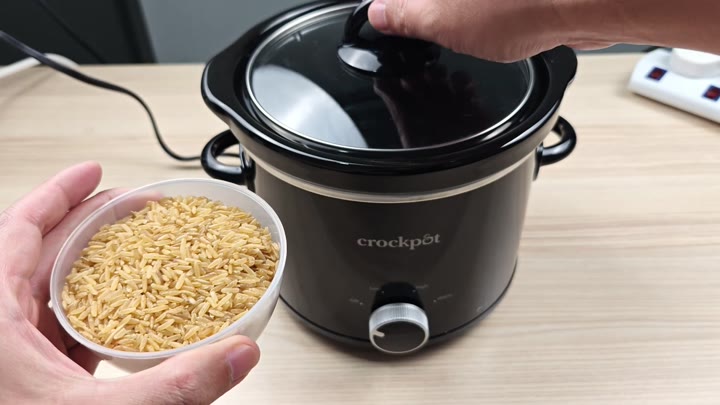
It is just water and rice.
Picking up a cup of uncooked brown rice, you notice the grains are hard and dry. Starch needs to be removed for texture so it’s time to wash those grains.
Measuring and preparing the rice
Rinse the rice under cold running water. No one want gummier rice in their final product.
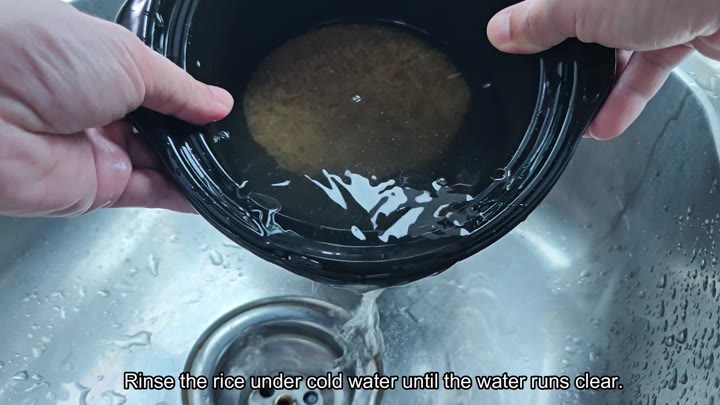
Then you take it, put it in the bowl, swirl it around. Swirl it around and all of a sudden, the water gets real muddy and cloudy.
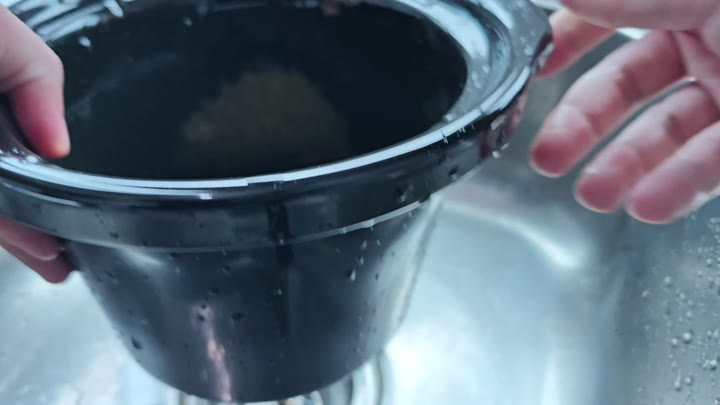
So then you drain it and you do it again a few more times. And then eventually you get to where the water is clear, and that really cleans up the final texture. It just feels like all the grains are separate and clean and there’s not any extra powder hanging on them.
Take out your regular old measuring cup and measure exactly two cups of water. Why? Brown rice requires more water than white rice and that’s what all of this comes down to: ration.
Because brown rice will take longer to soften up, you’ll want to use twice as much water. In other words, for each cup of rice you’ll be using two cups of water. Make sense? Don’t make guesses. Use regular measurement and don’t break from it.
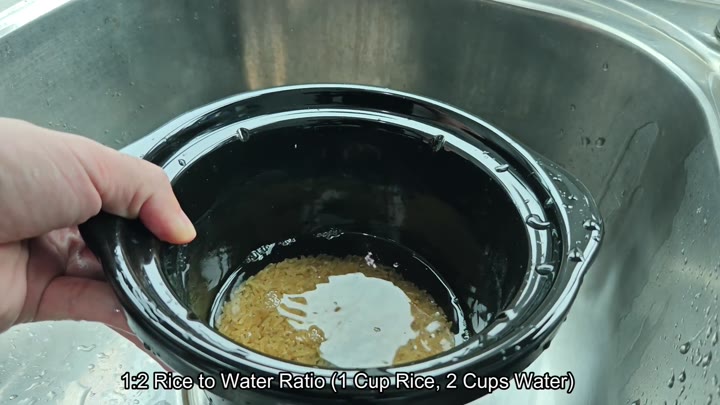
Once the rice is rinsed, you simply pour the water over top of it. The water in the pot should cover the rice. There’s nothing to stir everything settles down into the insert, and you leave it alone.
No stirring here just letting it soak in the water that fully covers grains. Now it’s ready for the slow cook cycle, and you don’t add anything more.
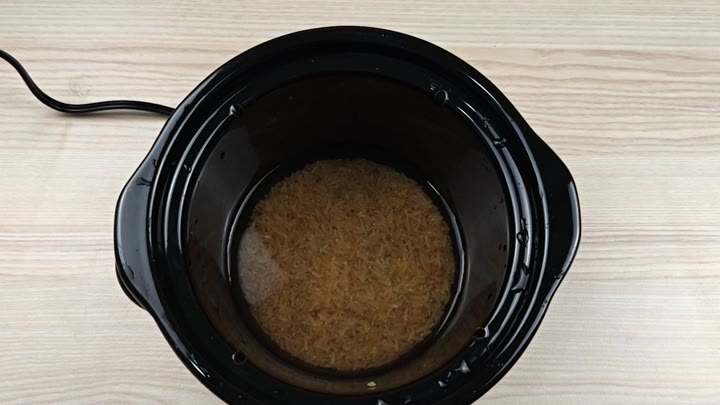
This isn’t fast food, though: You set the dial to Low heat. Five or six hours later, brown rice is ready (brown rice takes longer to cook then white rice).
Let it work its magic, then walk away from the kitchen; the slow cooker does the heavy lifting, which means you don’t have to baby-sit the pot. The hard grains take time to absorbs the heat, and gradually soften up.
After five hours, time flies by and you return to see how everything’s going. The rice has soaked up all of the water and appear to be both tender and fluffy.
No more hard spots exist anywhere, perfect! And as expected, you’ve found preparing this meal fairly simple and totally worth waiting for. Good enough to even serve as a side, the rice is finished.