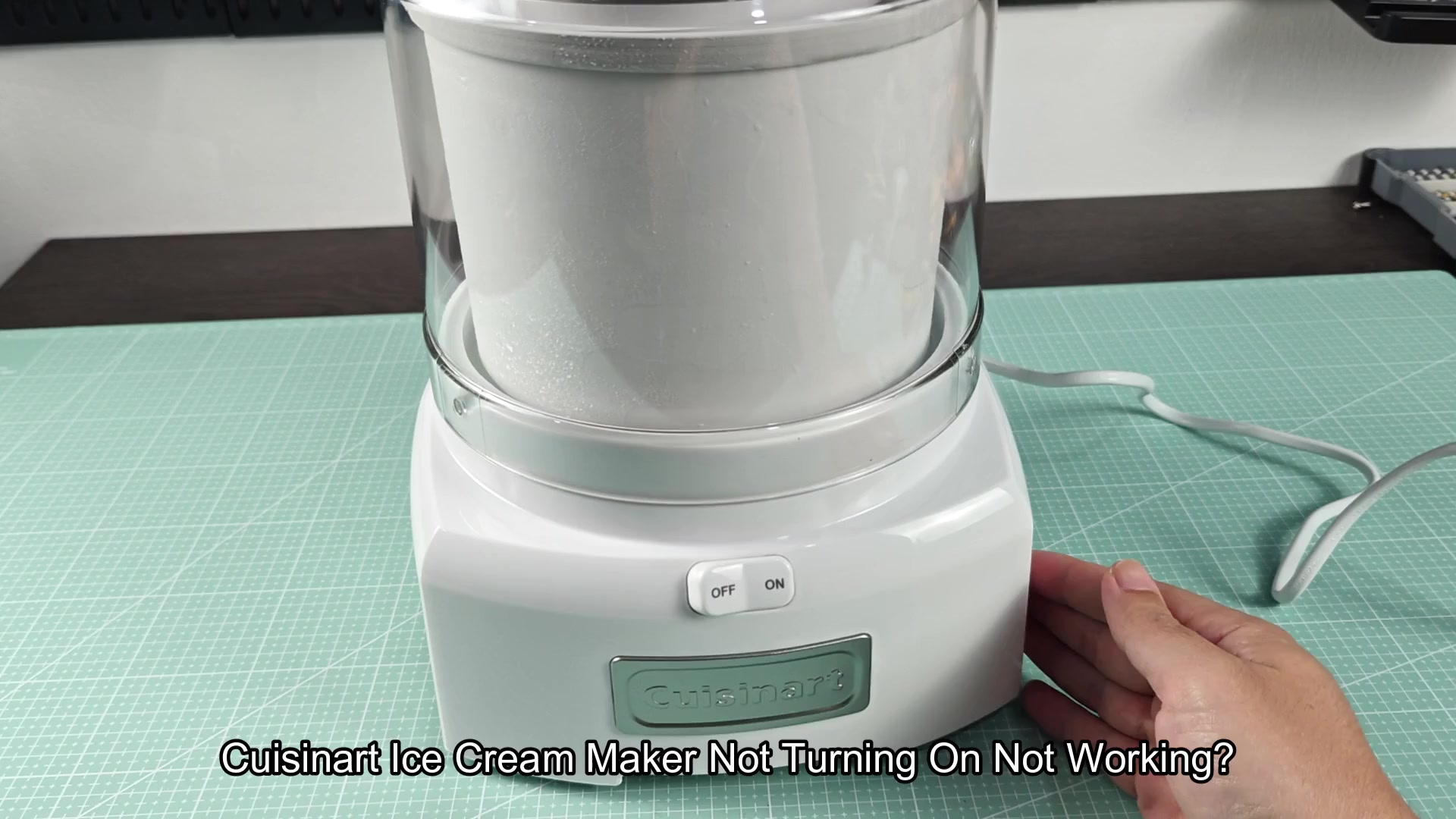
If your Cuisinart ice cream maker won’t turn on, check for simple fixes… There’s a chance the base unit died but you do not need to buy a replacement right away!
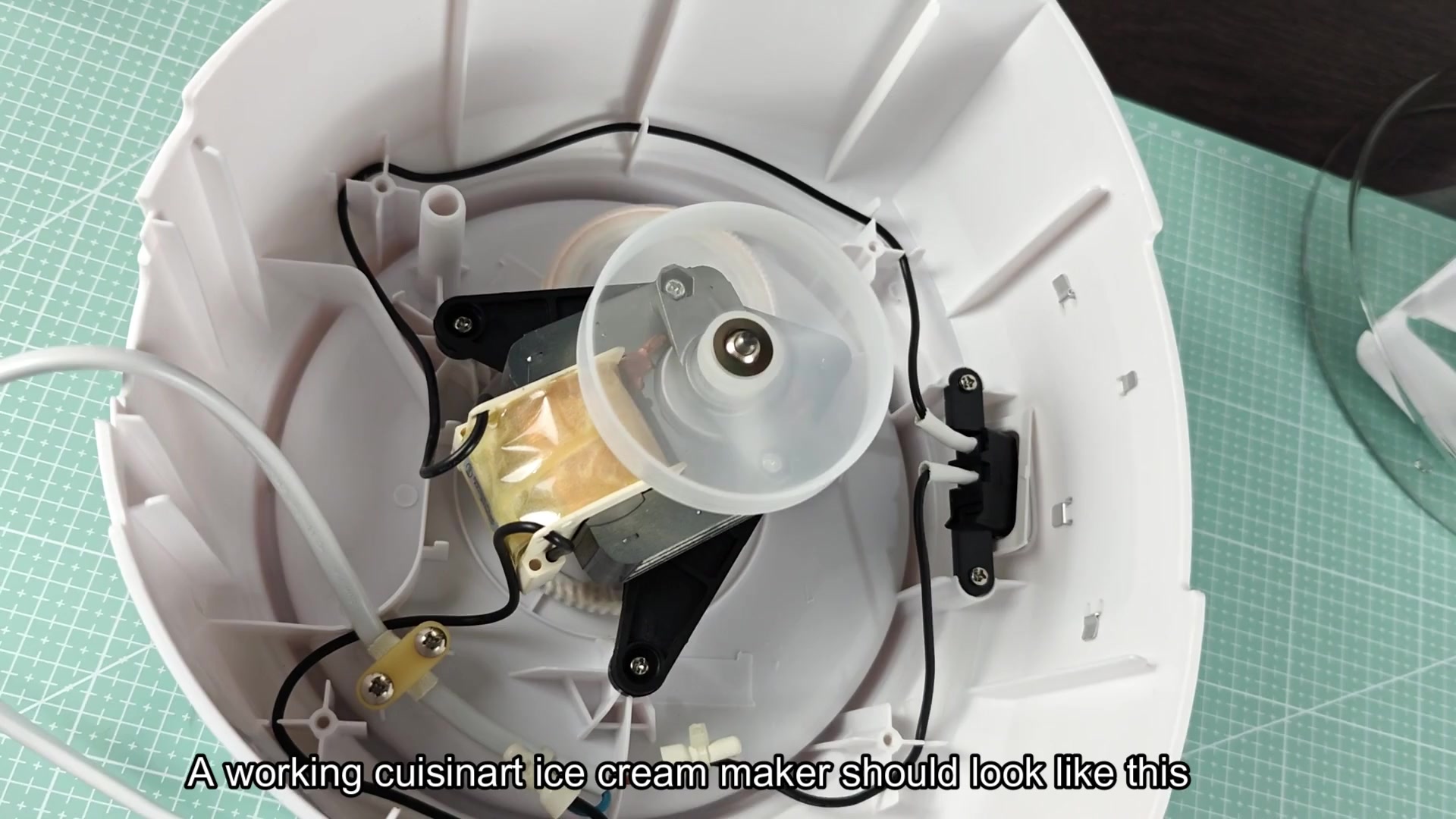
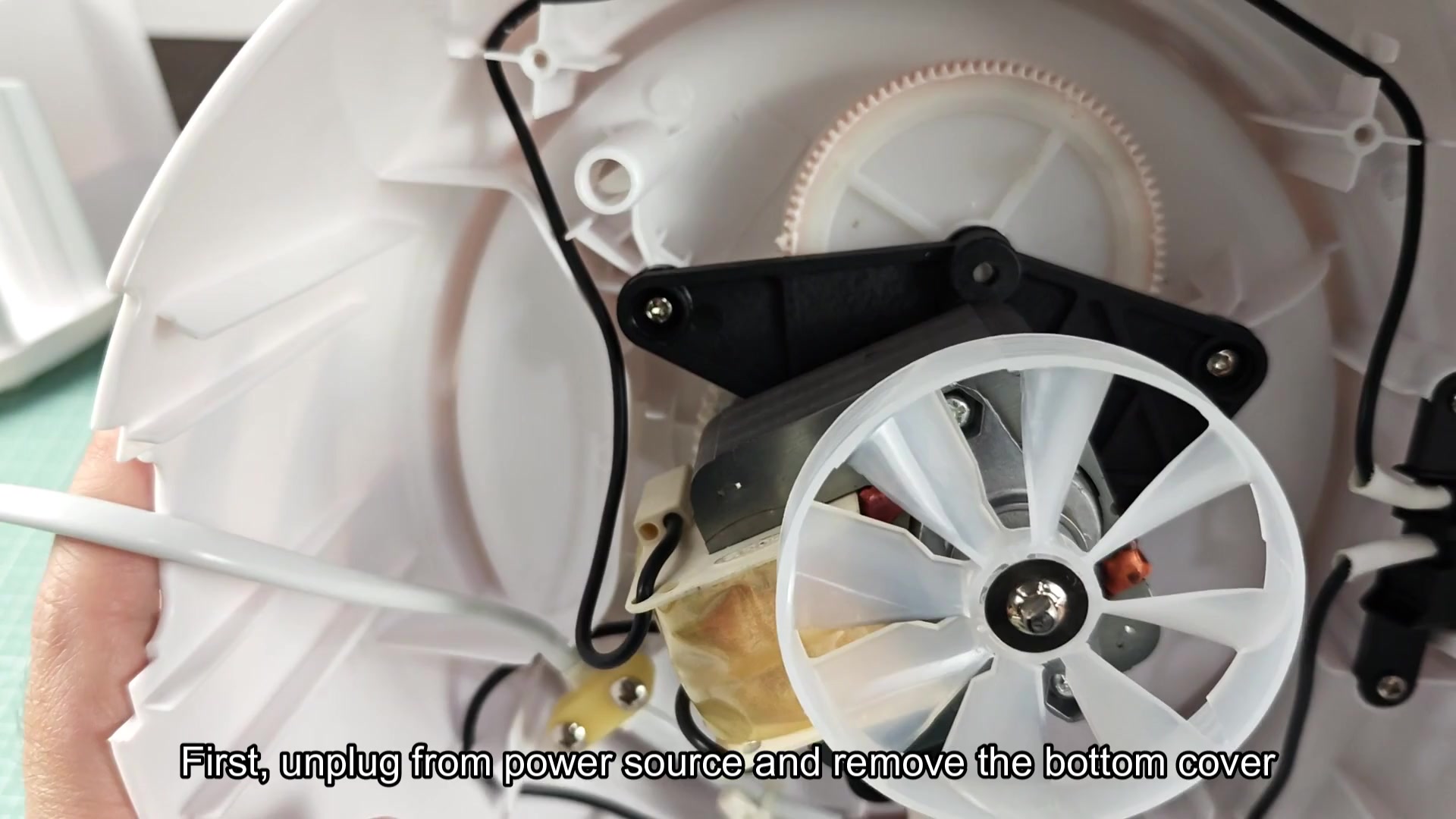
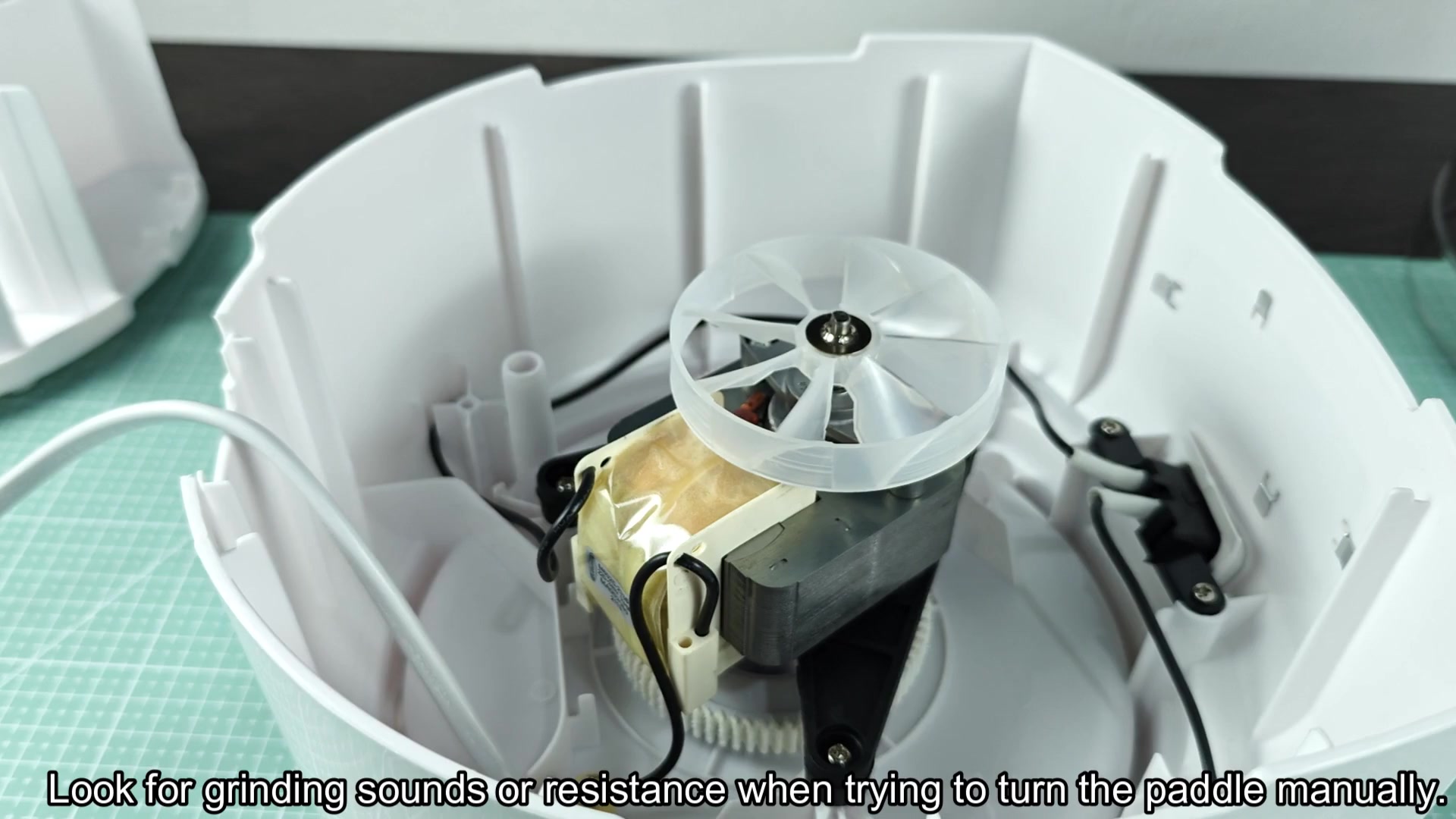
First, prioritize safety. Before attempting anything, unplug the ice cream maker. Take off the bottom cover and reveal what lies behind the plastic exterior of your ice cream machine. The bottom panel pops right off and you can see into motor assembly as well as the wiring of the machine. There is a central screw holding in place a fan-like wheel and underneath it are a white plastic gear mechanism.
At first glance, everything looks intact, yet you cannot just use your eyes and say why the machine quit functioning. Certain failure points is common on these machines and you must inspect them.
Inspecting Common Failure Points
If you turn it on and nothing happens, it’s probably the power switch. Often a bad one won’t allow any electricity into the system at all. Check to see if it has a good connection between the switch and the rest of the circuitry.
Over time, the contacts gets bad and can cause this little piece to be the downfall of the entire ice cream maker. It’s an easy thing to miss in your troubleshooting process and checking it first will save you a headache down the road. The drive gear is another frequent problem. When your ice cream maker won’t turn, yet you hear it humming, there’s some physical restriction preventing it from spinning. Inspect the drive gear for any wear.
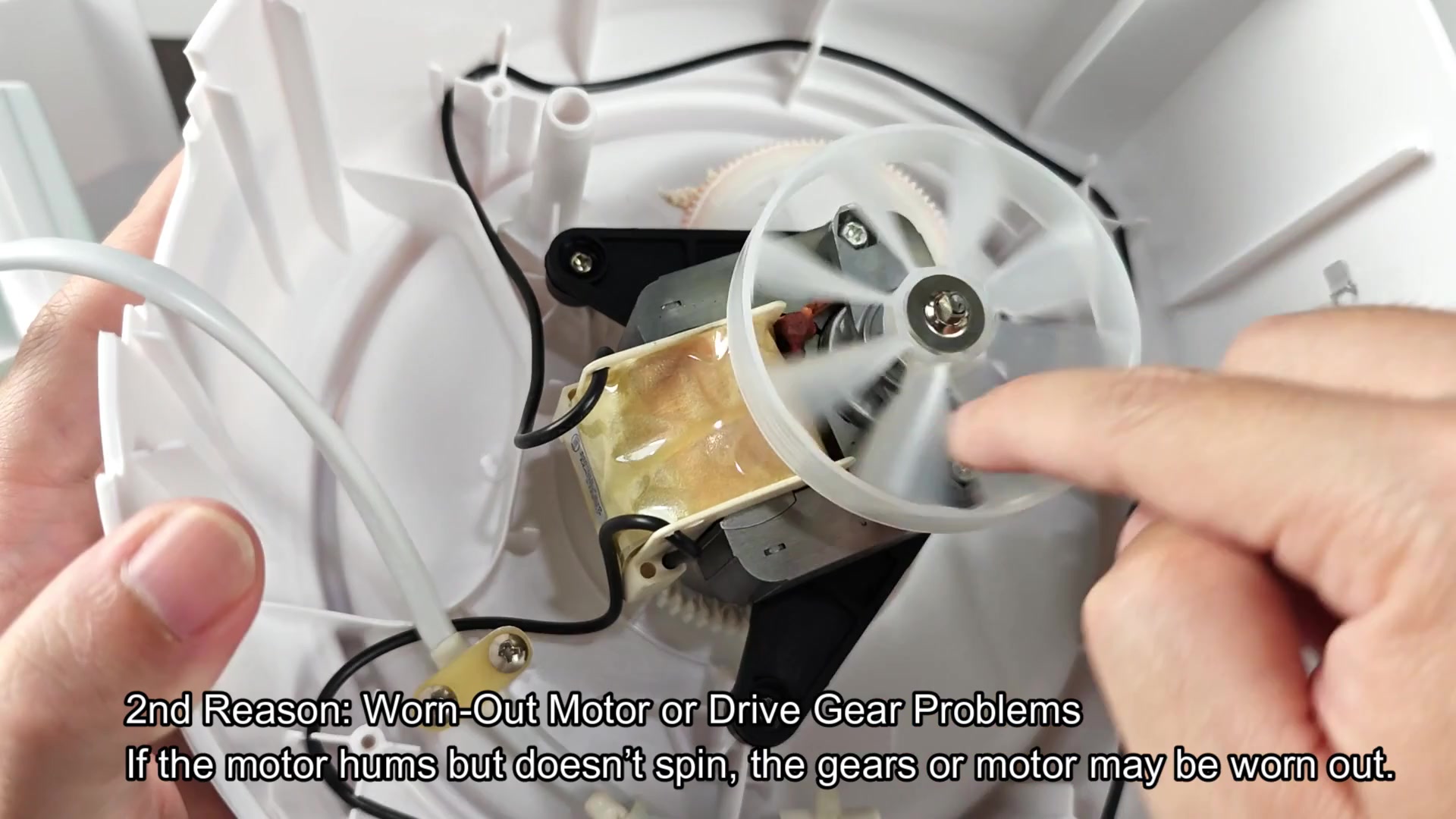
Does it feel like it’s binding when you try to manually turn it with your hand? That’s a sign that something has gone wrong mechanicaly. Hearing grinding means a seized bearing or most likely stripped teeth.
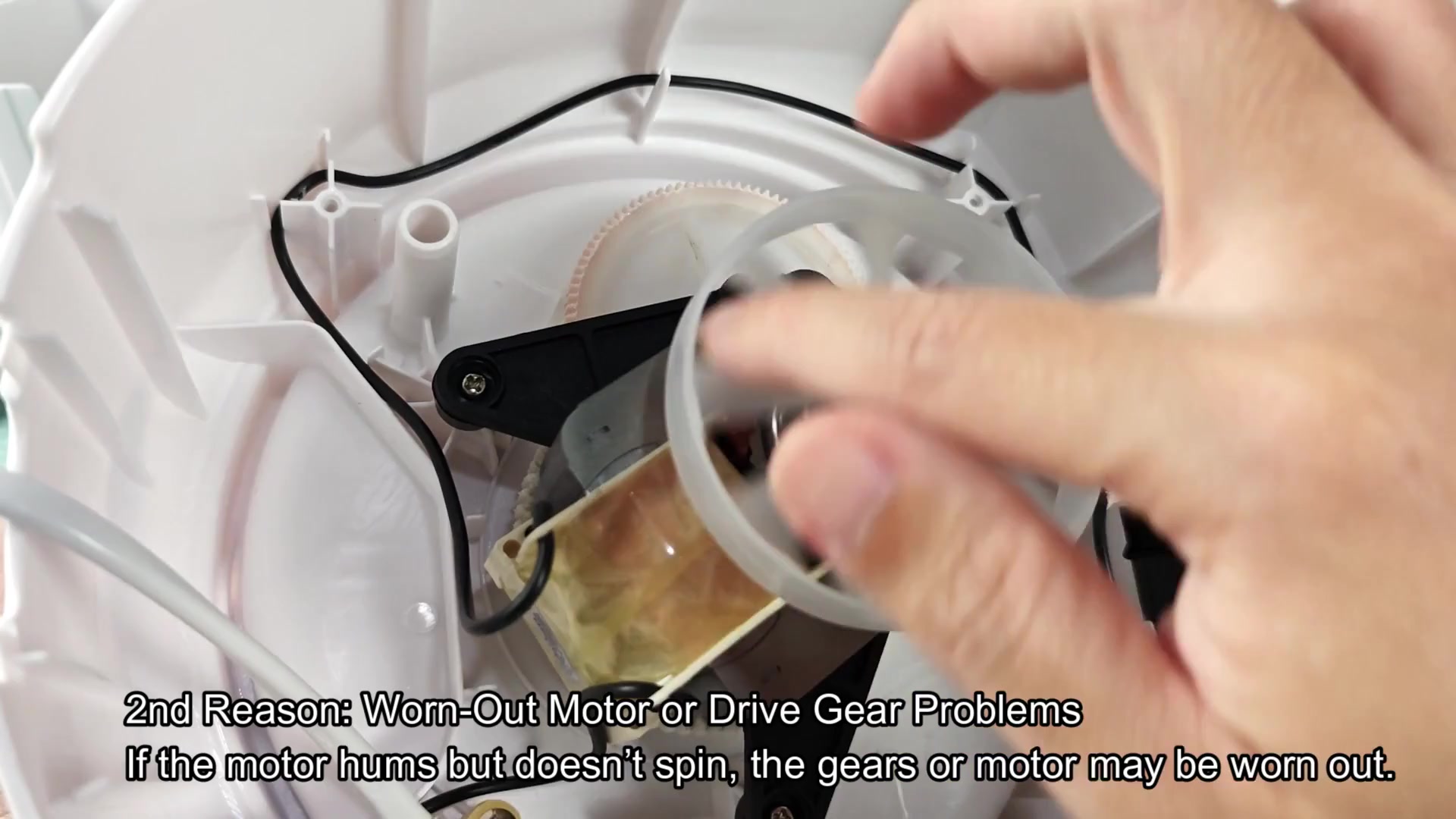
Even if your motor is electrically dead, it may still be mechanically working. Which will determine what you decide to replace versus repair. A common occurrence with worn out motors is that they’ll warn you of their coming failure by being reluctant to start and you will notice a change in sound or even a strain as they try to spin up.
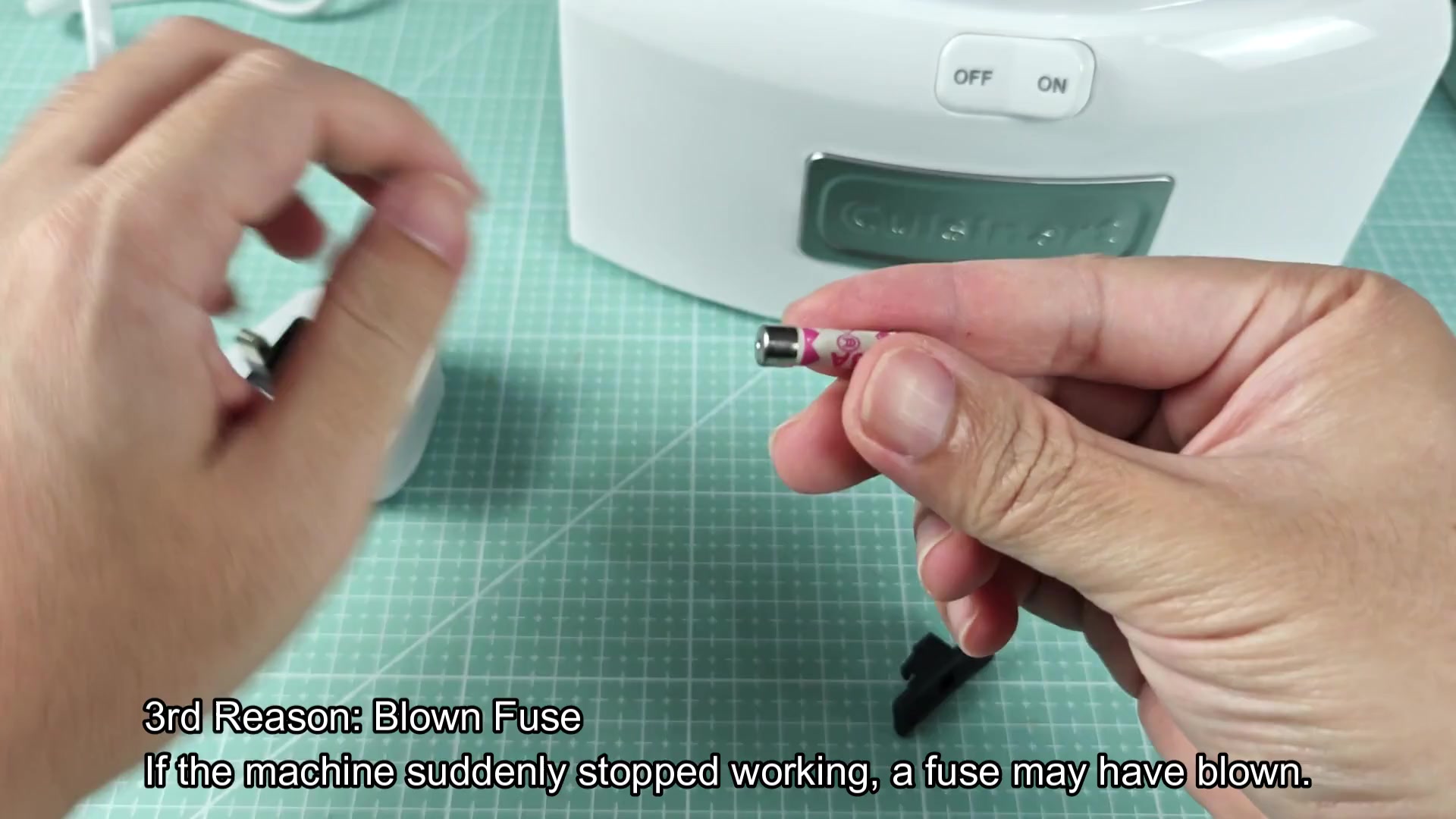
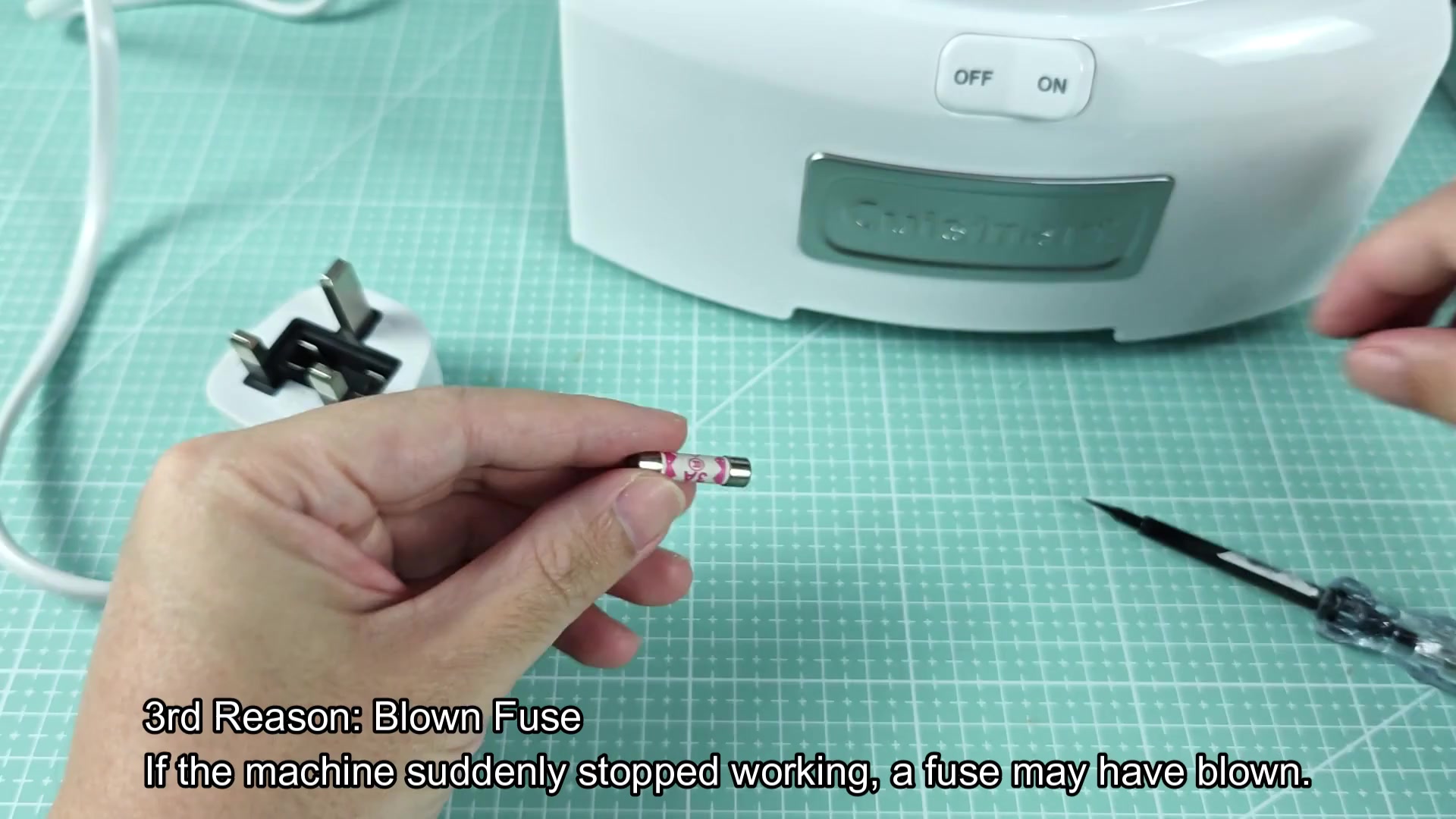
If you try them and all you get is silence, it is not because something is mechanically jammed, but more likely due to an electrical break. That really narrows it down to a couple of possible culprits so now check your fuses (if they are even present) next. Safety devices like fuses can be tripped immediately from electrical surges which cause sudden shutdowns. If it cuts out without warning then one of the most common causes is a blown fuse. You can use a screwdriver to pry open the little fuse compartment on your plug, UK plugs has built-in fuse compartments that are easy to access.
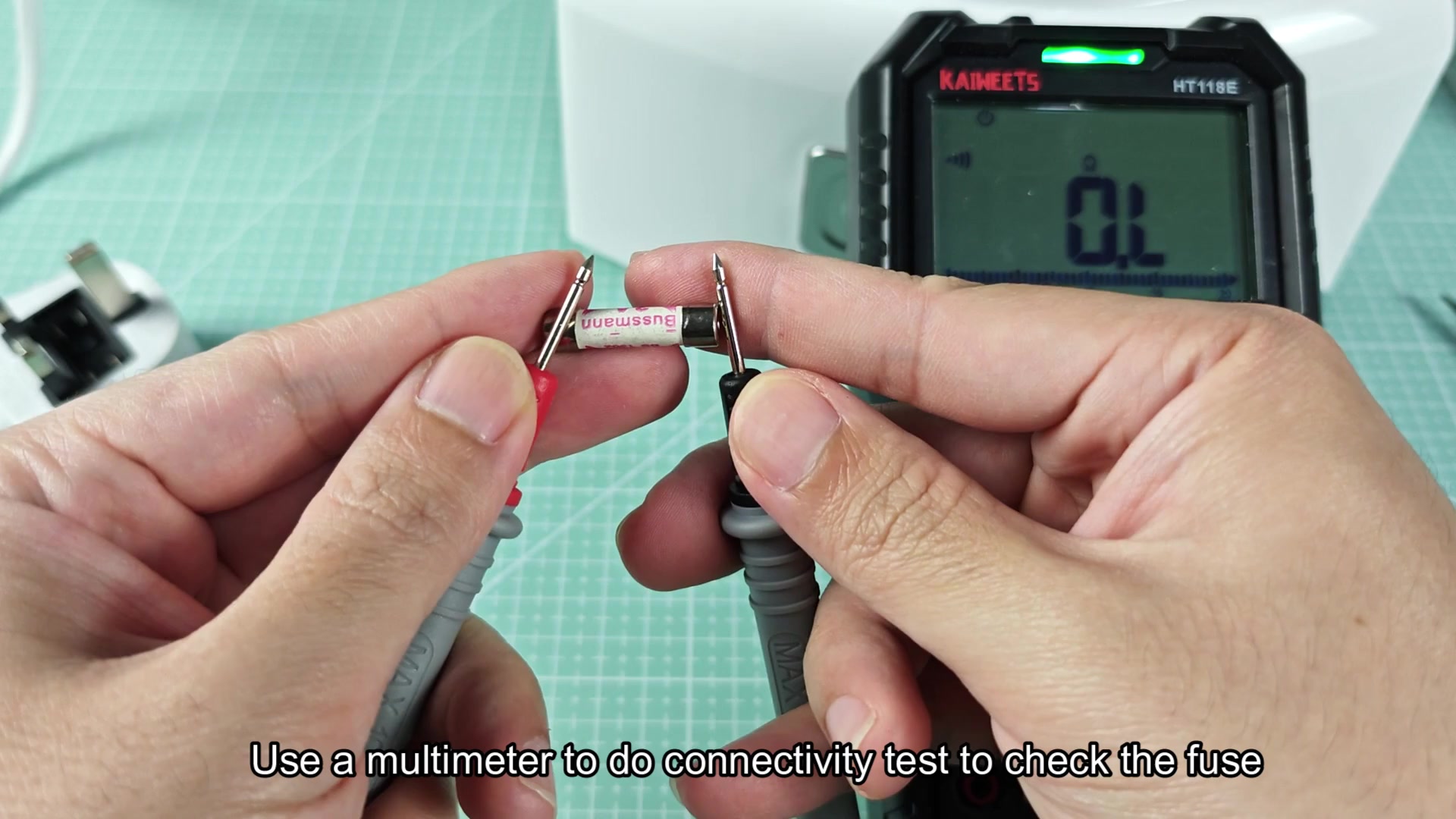
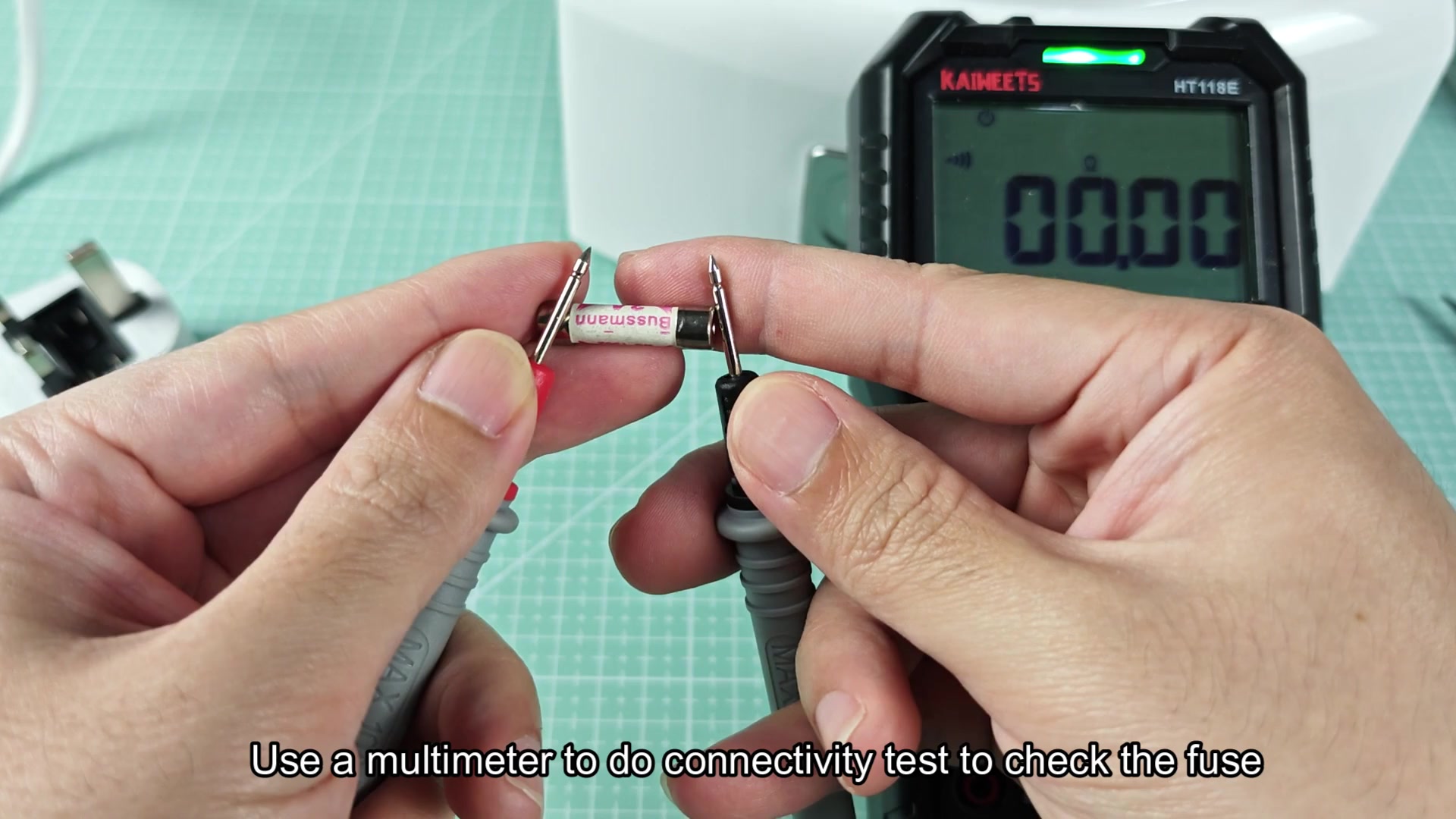
Inside you should of see a tiny cylinder-shaped fuse waiting to be tested, which might appear perfectly fine but in fact is broken. A multimeter tests the fuse accurately; there’s no way to tell visually if it has an internal break in its filament. You want your multimeter set on continuity (beeps or indicates lower resistance with a complete circuit).
If you probe each end of the fuse, that’s the definitive answer. Guesswork is eliminated. Can current flow through? You might notice on the multimeter screen that it reads infinity or open circuit at first which means the fuse has blown. Remove it and install a new identical rated fuse then check the new fuse for continuity by probing it again.
If your meter displays a very small number like zero ohms or close to it, you know the new fuse is good and will work. So now we have some hope for the machine because it shows there is a good path for current to flow. Reconnect the plug and test it with a known good fuse, making sure everything inside is intact and appears clean. No melted plastic pieces? No burnt wires?
How does that match up against a healthy looking interior? If all seems well with your wiring and motor at this point then the fuse or power switch is likely the only problem. Now that you’ve got it all put back together and it’s snapping into place on the bottom cover snugly, plug it back in and flip the switch, hopefully no problems with the new fuse.
It should come alive pretty fast as the motor engages and the bowl starts spinning again. Oftentimes it’s really quite an easy fix, it was simply a blown fuse!